This blog is a handy guide that helps you streamline your daily tasks, save and grow your money, and get better at handling your feelings. It’s filled with easy-to-follow advice that makes a big difference in how you work, spend, and feel. Dive into our Pioneeredge.io site for practical tips and tricks that make life smoother and more fulfilling.
💬 Final Thought: When you truly focus on you, life becomes simpler, clearer, and more fulfilling. The best version of your life starts with the best version of you.
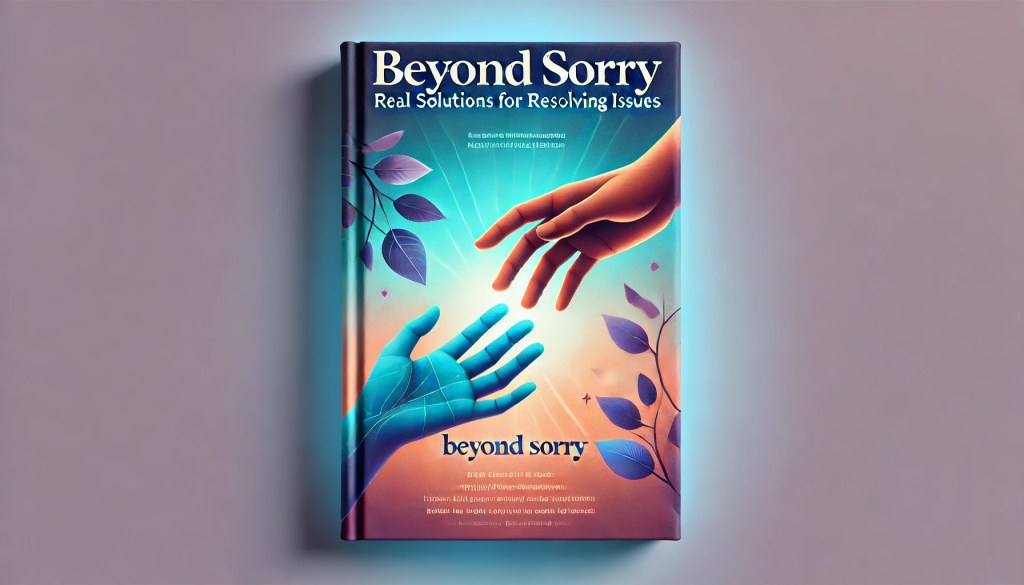
When conflicts arise or mistakes are made, a heartfelt “sorry” is often the first step toward resolution. But while apologies are valuable, they are not the ultimate solution. True resolution requires action, understanding, and effort.
1. Acknowledge the Impact of Your Actions
An apology is incomplete without recognizing the harm caused. Take a moment to empathize with the other person’s feelings and acknowledge their pain.
“An apology is a lovely perfume; it can transform the clumsiest moment into a gracious gift.” – Margaret Lee Runbeck
2. Take Responsibility Without Excuses
Instead of justifying your behavior, own up to your mistakes. Accountability shows maturity and willingness to change.
“Mistakes are always forgivable if one has the courage to admit them.” – Bruce Lee
3. Understand the Root Cause
Identify why the issue occurred to ensure it doesn’t happen again. Reflecting on the root cause helps avoid repetitive mistakes.
“The only real mistake is the one from which we learn nothing.” – John Powell
4. Take Action to Make Amends
Actions speak louder than words. Show that you are genuinely sorry by making efforts to correct the mistake or repair the harm done.
“Well done is better than well said.” – Benjamin Franklin
5. Communicate Openly and Honestly
Clear communication is key to rebuilding trust. Discuss the situation, listen actively, and express your commitment to resolving the problem.
“Honest communication is built on truth and integrity and upon respect of the one for the other.” – Benjamin E. Mays
6. Rebuild Trust with Consistency
Trust is fragile and takes time to restore. Consistent positive actions, paired with honesty, show your sincerity.
“Trust is built with consistency.” – Lincoln Chafee
7. Learn and Grow from the Experience
Every mistake is a chance to improve. Reflect on what you’ve learned and use it to strengthen your relationships and character.
“Failure is the condiment that gives success its flavor.” – Truman Capote
8. Be Patient in the Healing Process
Healing emotional wounds takes time. Allow the other person to process their feelings and rebuild the relationship at their pace.
“Patience is not the ability to wait, but the ability to keep a good attitude while waiting.” – Joyce Meyer
9. Prevent Future Conflicts
Focus on improving communication and understanding in your relationships to avoid similar issues in the future. Proactive care is always better than reactive apologies.
“The best way to predict the future is to create it.” – Peter Drucker
10. Conclusion: Move Beyond Words
An apology is just the starting point. Real solutions come from addressing the issue, learning from mistakes, and committing to growth. True resolution is found not in the words “I’m sorry,” but in the actions that follow.
“Sorry works when a mistake is made, but not when trust is broken. So, in life, make mistakes but never break trust.” – Anonymous
Life doesn’t always go the way we plan. Sometimes we chase after things, hoping they’ll bring us happiness, only to find that they slip away. The idea that “what’s meant to be yours will be yours” reminds us to let go of constant control and trust that what’s right for us will come naturally.
1. Let Go of the Need for Control
Trying to control everything leads to stress and disappointment.
Life has its own timing—things come when they’re supposed to, so relax and trust the process.
“Sometimes, things have to go wrong in order to go right.” – Sherrilyn Kenyon
2. Find Peace in the Present
Focusing on the future too much can create anxiety.
Believing that what’s meant for you will come helps you enjoy the present moment more.
3. Accept Setbacks as Redirection
Not getting what you want can feel disappointing, but it often opens doors to better things.
“You must learn to let go. Release the stress. You were never in control anyway.” – Steve Maraboli
4. Be Patient
Good things take time. Rushing often makes us miss what’s truly right for us.
“Patience is not the ability to wait, but the ability to keep a good attitude while waiting.” – Joyce Meyer
5. Be Yourself
When you’re authentic, you naturally attract people and opportunities that fit who you are.
“What you seek is seeking you.” – Rumi
6. Trust Life’s Flow
Some things just fall into place without any effort. This is life’s way of showing you that it’s meant to be.
Let life flow and trust that the right things will come.
7. Practice Gratitude
Being thankful for what you have makes you more open to new opportunities.
“Gratitude turns what we have into enough.” – Aesop




 Pioneer Edge