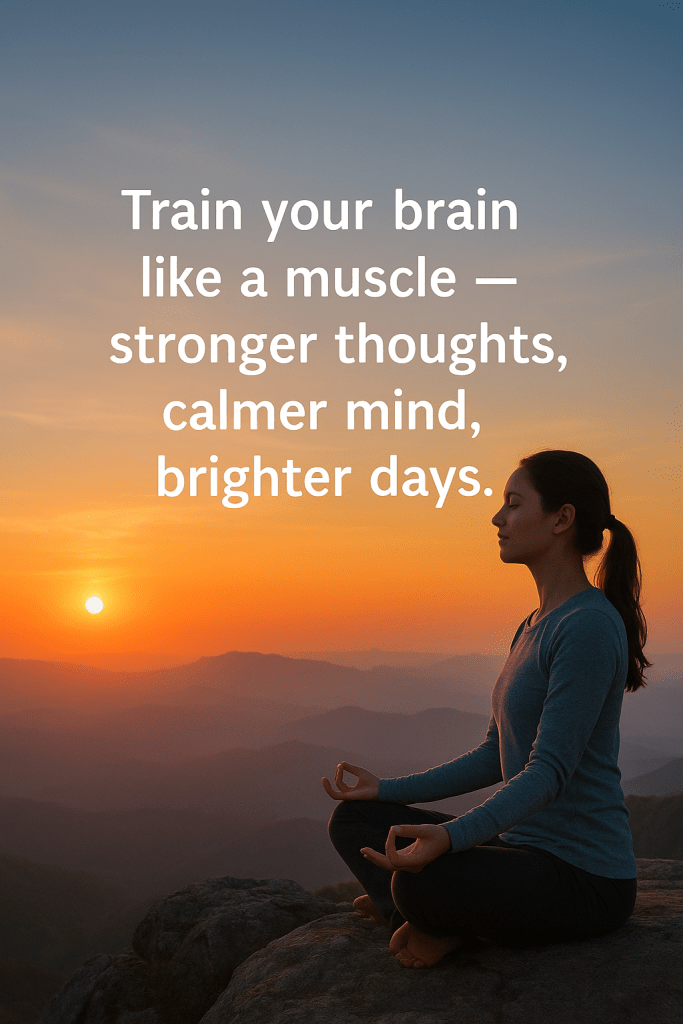
🧠 Mental Fitness: Treating Your Brain Like a Muscle

🌟 Introduction

Just like your body needs exercise to stay strong, your mind also needs regular training to stay healthy, calm, and focused.
Mental fitness isn’t about fixing problems — it’s about building strength, clarity, and emotional balance every day.

💬 “The mind is just like a muscle — the more you exercise it, the stronger it gets.”


💪 1. Train Your Brain Daily

  • Think of your brain as a muscle that grows stronger with use.
  • Do puzzles, read, learn new things, or try something different every day.
  • Challenge your routine to wake up new areas of your mind.

💬 “Great things never come from comfort zones.”


🧘‍♀️ 2. Practice Mindfulness and Meditation

  • Spend at least 10 minutes daily in silence or deep breathing.
  • It reduces stress, increases focus, and helps you stay grounded.
  • Mindfulness teaches you to live in the now, not in the noise.

💬 “Quiet the mind, and the soul will speak.” – Ma Jaya Sati Bhagavati


❤️ 3. Strengthen Emotional Resilience

  • Learn to manage emotions instead of running from them.
  • Focus on what you can control and let go of what you can’t.
  • Positive thinking is mental strength training in disguise.

💬 “You cannot control the waves, but you can learn to surf.”


🧩 4. Keep Learning and Growing

  • Pick up a new hobby, language, or creative skill.
  • Growth keeps your mind flexible and curious.
  • Every new experience builds fresh neural connections.

💬 “Once you stop learning, you start declining.” – Albert Einstein


🥗 5. Fuel Your Brain Right

  • Eat foods rich in omega-3, fruits, vegetables, and nuts.
  • Drink plenty of water and sleep well.
  • A healthy body supports a sharp, peaceful mind.

💬 “Take care of your body — it’s the only place you have to live.” – Jim Rohn


🤝 6. Build Social Connections

  • Talk, share, and connect with positive people.
  • Meaningful conversations boost happiness and mental stability.
  • Laughter and empathy are powerful mental vitamins.

💬 “Connection is the energy that exists between people when they feel seen, heard, and valued.” – Brené Brown


🏃‍♀️ 7. Move Your Body for Mental Strength

  • Walk, dance, or stretch — movement releases happy hormones.
  • Exercise improves focus, memory, and confidence.
  • A fit body supports a fit mind.

💬 “A healthy outside starts from the inside.” – Robert Urich


✍️ 8. Journal and Reflect

  • Write your thoughts to understand your emotions.
  • Journaling helps release mental clutter and find clarity.
  • It’s your daily talk with your inner self.

💬 “Writing is the painting of the voice.” – Voltaire


🌈 9. Rest and Recharge

  • Strength also means knowing when to pause.
  • Sleep, relax, and let your mind recover.
  • Rest is part of progress — not the absence of it.

💬 “Rest and self-care are not wasteful. They are acts of survival.”


🌻 Conclusion

Mental fitness is not about avoiding life’s challenges — it’s about training your mind to stay calm, confident, and creative through them.
Like your body, your brain becomes stronger with consistent care and attention.
Start small, stay steady, and your mental strength will grow — one thought at a time.

💬 “The mind is everything. What you think, you become.” – Buddha

🌱 Hard Times Don’t Last Forever

Life is not a straight road—it’s a journey filled with twists, turns, ups, and downs. When we go through tough times, it feels as if the pain will never end. But here’s the truth: hard times are temporary. They come to test us, to teach us, and most importantly, to prepare us for something better.

🌤️ Why Hard Times Don’t Last Forever

  1. Every Storm Eventually Ends
    No matter how heavy the rain, the clouds always clear. Similarly, every challenge you face has an expiry date. What seems unbearable today will one day just be a memory.
  2. Struggles Build Strength
    Muscles grow when they are tested by resistance. In the same way, life’s struggles make you stronger, braver, and wiser. Without difficulties, we would never discover our true strength.
  3. Time is a Great Healer
    Wounds, whether emotional or physical, need time. As days pass, pain lessens, and perspective grows. What breaks you today may build you tomorrow.
  4. Mindset Shapes the Outcome
    If you see a problem as a dead end, it becomes one. But if you see it as a lesson, it becomes a stepping stone. Choosing hope over despair changes the way you experience tough times.
  5. You’re Not Alone
    Hardships feel lighter when shared. Leaning on family, friends, or faith can provide the comfort and support you need to move forward.
  6. Growth Happens in Darkness
    Seeds grow in the dark soil before they bloom in sunlight. Likewise, your struggles may be preparing you for opportunities you cannot yet see.
  7. Hope is the Lifeline
    One of the most powerful reminders during hard times is: “This too shall pass.” Hope is not just a feeling—it is the fuel that keeps you moving forward.

🌟 A Short Story to Remember

There’s a saying: “Diamonds are made under pressure.”
A young man once complained to his grandmother about all his struggles. She boiled carrots, eggs, and coffee beans in three pots of water. After a while, she asked him what he saw.

  • The carrots became soft.
  • The eggs turned hard inside.
  • The coffee beans transformed the water itself.

She explained: “Life’s difficulties affect us differently. Some become weak, some become tough, and some use hardships to create something new and beautiful.”

The young man realized that challenges don’t define us—our response does.


💡 Final Thought

Hard times are like passing clouds—dark for a while, but they never block the sun forever. Stay patient, stay strong, and believe that brighter days are ahead. Every struggle you face today is preparing you for a stronger, wiser, and more hopeful tomorrow.

Your comeback will always be stronger than your setback. 🌈

Mind Over Scroll: Reclaiming Focus in a Noisy World

🌐 The Problem: Constant Distraction

  • We live in an age of endless scrolling — social media, news feeds, and notifications.
  • Our attention is constantly pulled in different directions.
  • The average person checks their phone over 100 times a day.
  • This digital overload leads to reduced focus, stress, and productivity.

🧠 Why Focus Matters

  • Focus is the foundation of deep work and creative thinking.
  • Without it, tasks take longer and quality suffers.
  • Regaining control of your attention helps improve mental health, relationships, and overall well-being.

📱 Signs You’re Trapped in the Scroll Loop

  • You reach for your phone first thing in the morning.
  • You feel anxious when you’re offline.
  • You struggle to complete tasks without checking your phone.
  • You lose track of time while using social media.

🔁 The Cycle of Digital Distraction

  1. You feel bored or stressed.
  2. You open your phone for a “quick check.”
  3. Minutes turn into hours.
  4. You feel guilty and unproductive.
  5. You repeat the cycle.

🛠️ How to Reclaim Your Focus

1. Digital Declutter

  • Unfollow unnecessary accounts.
  • Turn off non-essential notifications.
  • Use “Do Not Disturb” mode during work hours.

2. Set Time Limits

  • Use built-in app timers (like Screen Time or Digital Wellbeing).
  • Try the Pomodoro technique – 25 minutes of focus, 5-minute break.

3. Create Phone-Free Zones

  • Keep your phone out of the bedroom and dining area.
  • Use a real alarm clock instead of your phone.

4. Practice Mindfulness

  • Start your day with 5 minutes of deep breathing or journaling.
  • Take short walks without your phone.

5. Replace Scrolling with Purposeful Habits

  • Read a physical book.
  • Do a puzzle or doodle.
  • Call a friend instead of texting.

🌟 Benefits of Reclaiming Focus

  • Improved concentration and memory.
  • Better sleep and reduced anxiety.
  • More meaningful connections with people.
  • Increased time for hobbies and passions.

✅ Final Thought

It’s not about quitting technology — it’s about using it mindfully.
When you choose mind over scroll, you gain back your most valuable asset: your attention.

The Crucial Role of Rest in Enhancing Productivity

Many of us believe that the more hours we put into our work, the more productive we will be. However, this is a misconception. Rest, including sleep and regular breaks, plays a crucial role in enhancing productivity. Here’s why rest is important and how it can significantly improve your efficiency.

1. The Role of Sleep in Productivity

a. Cognitive Function

  • Memory Improvement: Sleep helps consolidate memories, making it easier to recall information.
  • Enhanced Problem-Solving: A well-rested brain is better at solving complex problems.
  • Boosted Creativity: Sleep fosters creative thinking and innovation.

b. Energy Levels

  • Sustained Energy: Sleep replenishes energy, allowing you to be active and alert throughout the day.
  • Preventing Fatigue: Adequate sleep prevents daytime sleepiness and fatigue.

c. Emotional Stability

  • Mood Regulation: Good sleep reduces mood swings and improves emotional stability.
  • Better Interpersonal Relations: Emotional stability leads to more harmonious interactions with colleagues and others.

2. The Benefits of Taking Breaks

a. Enhanced Focus

  • Improved Concentration: Short breaks help maintain focus and attention.
  • Mental Refreshment: Breaks provide a mental reset, preventing cognitive overload.

b. Stress Reduction

  • Lower Stress Levels: Regular breaks help manage and reduce stress.
  • Improved Mental Health: Taking breaks can alleviate anxiety and improve overall mental health.

c. Preventing Burnout

  • Avoiding Exhaustion: Breaks help prevent physical and mental exhaustion.
  • Sustained Performance: Regular breaks ensure long-term productivity and performance.

d. Physical Health Benefits

  • Reduced Eye Strain: Breaks from screens reduce eye strain and headaches.
  • Improved Posture: Moving around during breaks helps maintain good posture and reduces muscle tension.

3. Tips to Incorporate Rest into Your Routine

a. Prioritize Sleep

  • Consistent Sleep Schedule: Go to bed and wake up at the same time every day.
  • Relaxing Bedtime Routine: Engage in calming activities before bed, such as reading or meditation.
  • Sleep-Friendly Environment: Ensure your bedroom is dark, quiet, and cool.

b. Schedule Regular Breaks

  • Pomodoro Technique: Work for 25 minutes, then take a 5-minute break.
  • Longer Breaks: Take a 15-30 minute break every few hours for deeper rest.

c. Use Breaks Wisely

  • Physical Activity: Take a walk, stretch, or do light exercises.
  • Relaxation: Practice deep breathing, meditate, or enjoy a hobby.
  • Disconnect: Avoid checking emails or social media during breaks to fully recharge.

d. Listen to Your Body

  • Recognize Fatigue: Take breaks when you start feeling tired or unfocused.
  • Stay Hydrated and Nourished: Drink water and eat healthy snacks to maintain energy levels.

e. Micro-Breaks

  • Brief Pauses: Take short 1-2 minute breaks to stretch or close your eyes.
  • Mini-Meditations: Spend a minute practicing mindfulness or deep breathing.

Conclusion

Rest is not a luxury but a necessity for maintaining high productivity levels. Adequate sleep and regular breaks are fundamental for cognitive function, energy restoration, emotional stability, focus, stress reduction, physical health, and preventing burnout. By prioritizing rest, you can enhance your productivity, improve your overall well-being, and achieve a healthier work-life balance. Remember, sometimes the most productive thing you can do is to take a break.