This blog is a handy guide that helps you streamline your daily tasks, save and grow your money, and get better at handling your feelings. It’s filled with easy-to-follow advice that makes a big difference in how you work, spend, and feel. Dive into our Pioneeredge.io site for practical tips and tricks that make life smoother and more fulfilling.
Life is full of challenges, and how we face them shapes our mental strength. Just as physical labor builds and strengthens the body, mental challenges and difficulties shape and strengthen the mind. Rather than avoiding challenges, we should embrace them as opportunities for growth, resilience, and self-discovery.
1. Overcoming Adversity Builds Resilience
Difficult situations push us to adapt and grow.
Every challenge faced and overcome strengthens our ability to cope with future struggles.
Resilience allows us to bounce back stronger from setbacks.
2. Mental Strength Comes from Pushing Limits
Like exercising muscles, mental strength grows when we push ourselves beyond our comfort zones.
Facing discomfort helps us develop the discipline and perseverance needed to overcome challenges.
Each time we face a difficult situation, our capacity to deal with stress and uncertainty increases.
3. Problem-Solving Skills Improve Through Struggles
Difficulty forces us to think creatively and find solutions.
Problem-solving is like a mental workout; it strengthens our ability to think critically and make decisions under pressure.
The more problems we tackle, the more efficient and resourceful we become.
4. Building Patience and Persistence
Difficulty teaches us patience, as we realize that success doesn’t come overnight.
Persistence, nurtured through overcoming difficulties, is key to achieving long-term goals.
Learning to stay committed during tough times translates into greater mental endurance.
5. Enhancing Self-Awareness
Difficulties often challenge our beliefs, values, and assumptions.
By reflecting on our reactions and thoughts during difficult times, we develop greater self-awareness.
Knowing ourselves better makes it easier to control emotions and maintain mental peace during challenges.
6. Transforming Failure into Growth
Failure is often seen as the result of difficulty, but it’s also an opportunity to learn.
Each failure teaches valuable lessons that build mental fortitude.
Embracing failure as a stepping stone helps us grow stronger and more focused on success.
7. Strengthening Focus and Determination
In times of difficulty, staying focused on the goal becomes even more critical.
Developing the ability to stay determined, even when the path is tough, strengthens mental clarity and concentration.
The more we push through difficult situations, the sharper our focus becomes.
8. Gratitude for the Journey
Embracing difficulty helps us appreciate life’s good moments more fully.
It teaches us gratitude for the strength we gain through hardship.
The challenges we face shape us into stronger, wiser individuals, ready to take on even greater tasks.
Life is full of changes and experiences that remind us that nothing lasts forever, and that includes both the positive and negative moments. The concept of “nothing is personal or permanent” encourages us to live with a sense of detachment, resilience, and acceptance. Here’s a simple breakdown:
Life Is Fluid
Everything around us, from relationships to situations, changes over time.
What feels permanent today may evolve or fade tomorrow.
Don’t Take Things Personally
People’s actions or words are often more about them than about you.
Avoid internalizing others’ behavior, as it may be influenced by their own struggles and experiences.
The Impermanence of Emotions
Both joy and sorrow are temporary. Emotions come and go, so learning to navigate them without being overwhelmed is crucial.
Realizing this helps reduce stress and anxiety, making it easier to let go of difficult feelings.
Change Is Inevitable
Change is the only constant in life. Whether it’s in your career, relationships, or personal growth, change will come.
Embrace the ebb and flow of life rather than resisting it.
Let Go of Attachments
The more we cling to people, places, or things, the more we may feel hurt when they change or leave.
Letting go doesn’t mean abandoning relationships but rather accepting that everything has its time.
The Temporary Nature of Pain
Pain, disappointment, and challenges don’t last forever. Every hardship eventually comes to an end, and growth can come from it.
Trust that better days are ahead, even when things seem tough.
The Power of Acceptance
By accepting the impermanence of life, we become more adaptable, resilient, and peaceful.
Acceptance allows us to find meaning in both the good and bad times.
Freedom in Letting Go
Letting go of the need for control or perfection allows us to experience life more fully.
When we stop fearing change, we can embrace opportunities with openness and curiosity.
Embrace the Present Moment
Since nothing is permanent, the present moment is all we truly have.
Focusing on the now allows us to live with intention and appreciate life as it unfolds.
Live with Grace
Understanding that everything is temporary encourages us to live with grace—taking life one step at a time, letting go when necessary, and adapting as we go along.
By understanding that nothing is personal or permanent, we cultivate resilience, peace, and acceptance, making it easier to navigate the unpredictability of life.
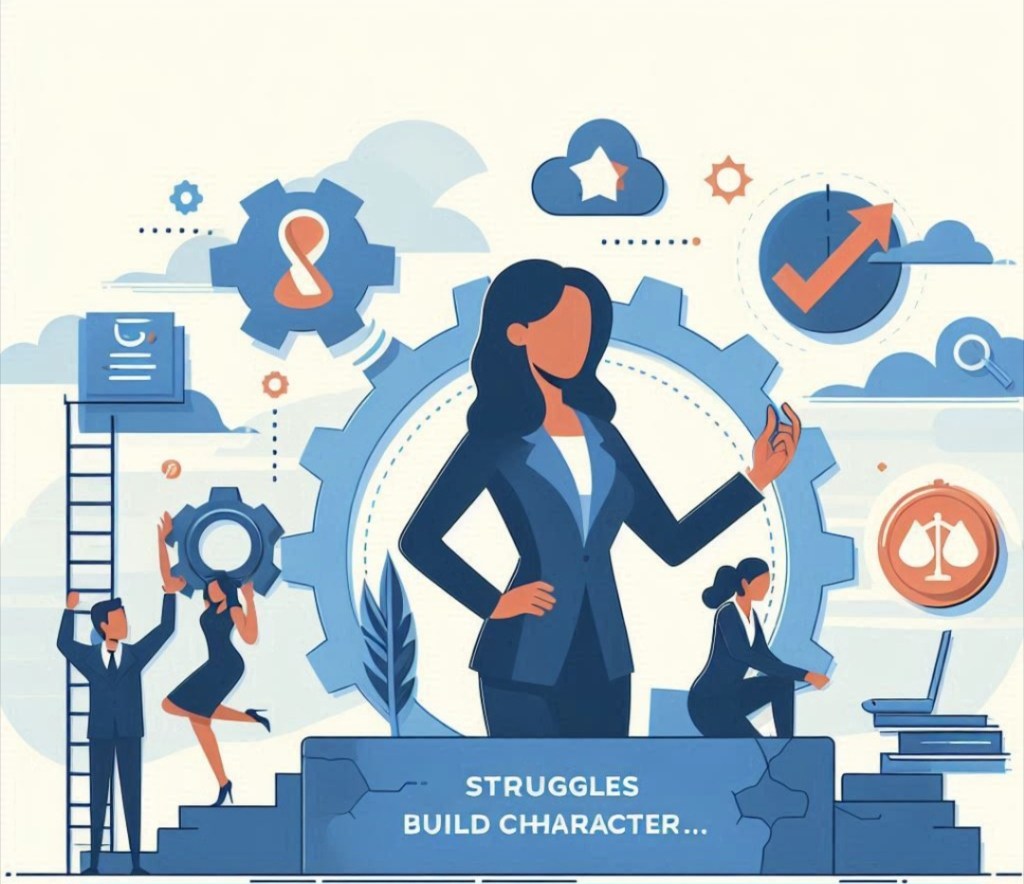
Introduction: Life is full of ups and downs, and we all experience struggles at some point. Whether it’s personal, professional, or emotional, these challenges can be difficult to face. However, struggles play a crucial role in shaping who we are and building our character. While we may want to avoid them, it is often through overcoming challenges that we grow stronger, wiser, and more resilient.
1. Strengthens Resilience:
Struggles teach us to bounce back from failures and setbacks. The more we face challenges, the stronger our ability to keep going despite difficulties.
Example: Every time we get through a tough situation, we become more confident in our ability to handle future challenges.
2. Develops Patience:
Struggle often requires time to overcome. During this process, we learn to be patient and trust that things will improve with effort and persistence.
Example: Working through a difficult project or overcoming a personal setback teaches us the value of waiting for positive outcomes.
3. Enhances Problem-Solving Skills:
Facing struggles forces us to think creatively and find solutions. It sharpens our ability to look at problems from different perspectives and come up with effective strategies.
Example: When you face obstacles, you learn to brainstorm alternatives and think outside the box to solve problems.
4. Builds Confidence:
Overcoming challenges boosts self-esteem. Each struggle we conquer reminds us of our capabilities and strengthens our belief in ourselves.
Example: Achieving a goal after hard work or getting through a difficult time makes us more confident in handling future challenges.
5. Encourages Self-Reflection:
Struggles often lead to personal growth by making us reflect on our strengths and weaknesses. Through self-reflection, we gain better self-awareness and understanding.
Example: After facing a tough time, we often take a step back and think about what we’ve learned about ourselves.
6. Cultivates Empathy and Compassion:
Going through struggles helps us understand the challenges others may face. This makes us more empathetic and compassionate towards others who are going through hard times.
Example: People who have faced financial struggles or health issues are often more understanding and supportive of others in similar situations.
7. Strengthens Mental Toughness:
Struggles build mental toughness, teaching us to stay calm under pressure and keep our emotions in check when things get difficult.
Example: Athletes, soldiers, and entrepreneurs all develop mental toughness by pushing through their struggles and staying focused on their goals.
8. Fuels Personal Growth:
Every challenge we face is an opportunity to grow. Struggles push us to step out of our comfort zones, learn new things, and develop as individuals.
Example: A difficult job, a failed relationship, or any setback can make us more mature and capable.
9. Teaches Gratitude:
Struggles help us appreciate the good things in life. Once we’ve been through tough times, we tend to be more grateful for the positive moments and the progress we’ve made.
Example: After overcoming illness or financial hardship, we appreciate our health and stability even more.
10. Builds Perseverance:
Struggles teach us not to give up. The more we persevere through difficulties, the more we learn to keep going, even when success seems far away.
Example: Inventors, scientists, and successful entrepreneurs often face repeated failures before they succeed, but their perseverance keeps them moving forward.
Conclusion:
Struggles are a necessary part of life, shaping who we are and helping us grow. Instead of fearing challenges, we should embrace them as opportunities to build character, strength, and resilience. Through struggle, we discover our true potential.


 Pioneer Edge