
Introduction
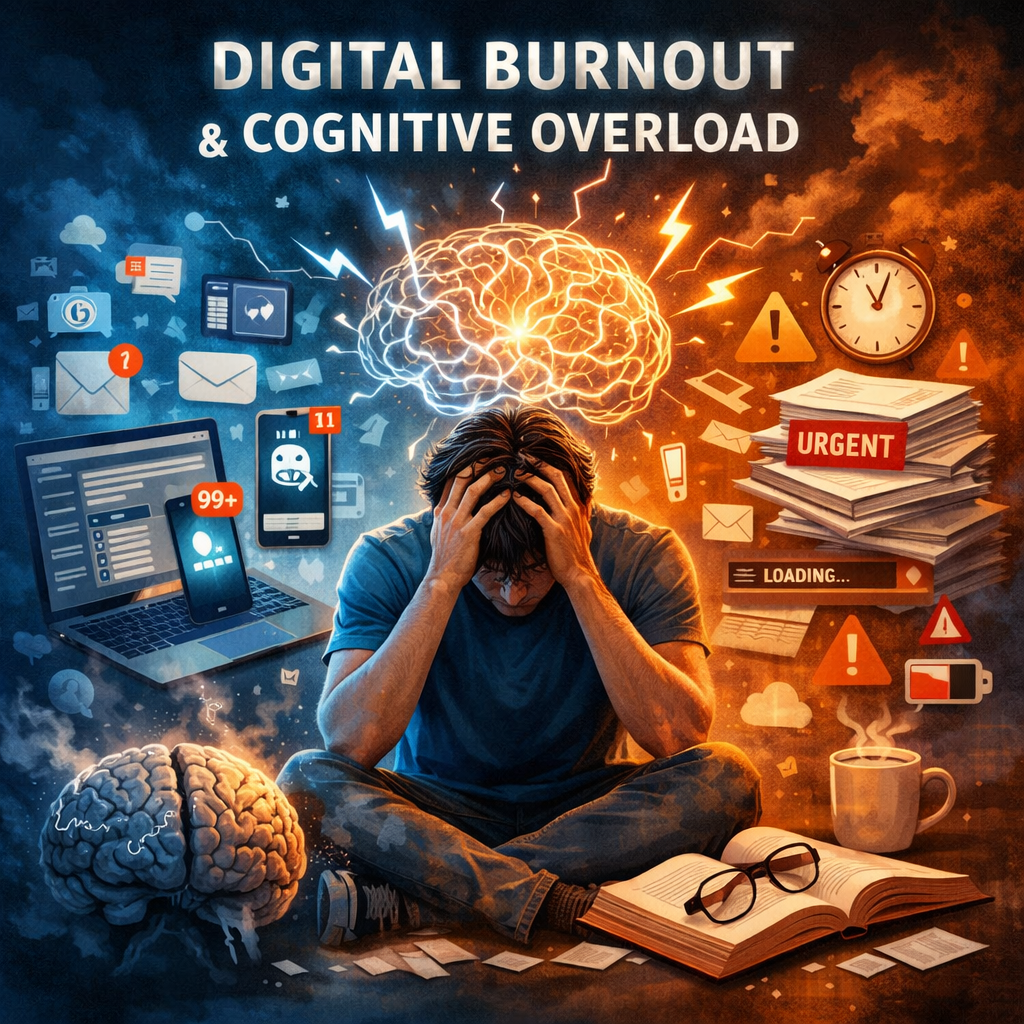
In today’s digital world, technology has become an inseparable part of our daily lives. From work and education to communication and entertainment, screens dominate almost every moment. While digital tools improve efficiency and connectivity, excessive and continuous exposure to them puts heavy pressure on the human mind. This growing mental strain leads to digital burnout and cognitive overload, affecting focus, emotional balance, productivity, and overall well-being. Understanding this issue is essential to creating healthier digital habits and protecting mental health in the modern age.
1. What is Digital Burnout?
- Digital burnout happens when we feel mentally tired due to excessive screen time.
- It is caused by constant use of phones, laptops, and digital platforms.
2. What is Cognitive Overload?
- Cognitive overload occurs when the brain receives more information than it can process.
- Notifications, emails, messages, and multitasking overload our thinking capacity.
3. Why is it Increasing Today?
- Continuous online work and virtual meetings
- Social media scrolling without breaks
- Pressure to stay available and respond instantly
- Information overload from news and digital content
4. Common Signs and Symptoms
- Difficulty concentrating and remembering things
- Mental fatigue and constant tiredness
- Irritability and mood swings
- Headaches and sleep problems
- Loss of motivation and productivity
5. Impact on Mental Health
- Increased stress and anxiety
- Reduced attention span
- Emotional exhaustion
- Feeling overwhelmed even with simple tasks
6. Impact on Work and Studies
- Lower efficiency and creativity
- Increased errors and poor decision-making
- Reduced learning capacity
- Declining engagement and interest
7. How Digital Burnout Affects Daily Life
- Less face-to-face interaction
- Reduced quality time with family
- Constant mental distraction
- Difficulty enjoying offline moments
8. Simple Ways to Reduce Digital Burnout
- Take regular screen breaks
- Limit unnecessary notifications
- Follow single-tasking instead of multitasking
- Set boundaries for work and personal time
- Practice digital detox regularly
9. Role of Mindfulness and Rest
- Short breathing exercises calm the mind
- Adequate sleep restores cognitive capacity
- Mindful usage of technology improves focus
10. Conclusion
- Digital tools are helpful, but overuse harms mental well-being.
- Managing screen time and information flow is essential for a healthy mind.
- Balance, awareness, and conscious digital habits can prevent burnout.
Closing Quote:
“Resting the mind is not a luxury—it is a necessity in a digital world.”
 Pioneer Edge