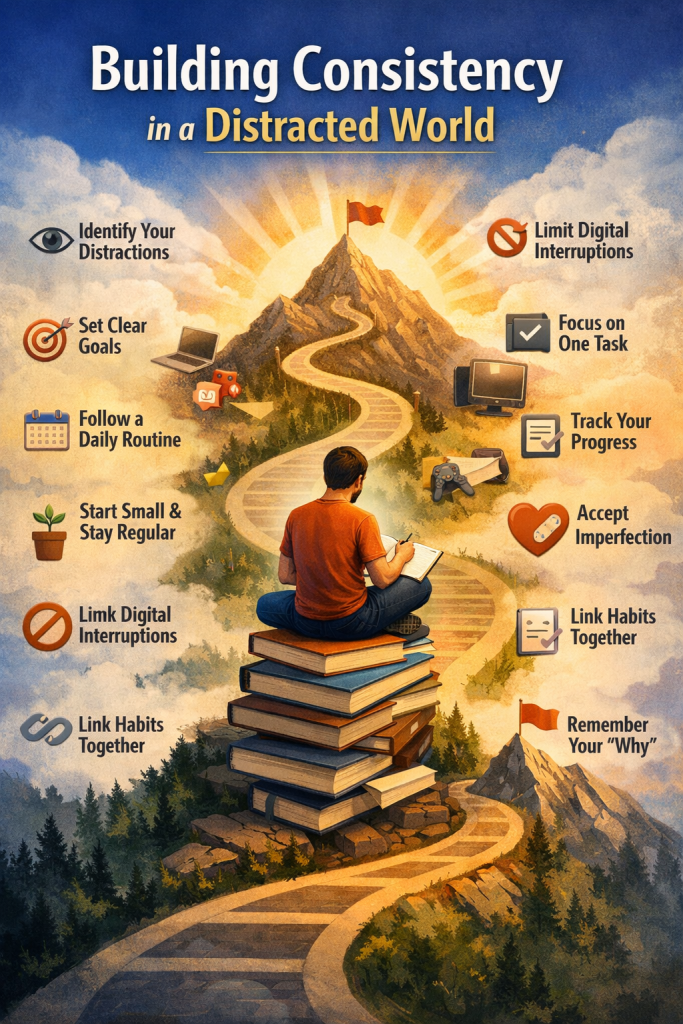
Building Consistency in a Distracted World

In today’s fast-paced digital environment, maintaining consistency has become increasingly difficult. Constant notifications, information overload, and competing priorities often disrupt focus. However, consistency remains a critical factor for personal growth, productivity, and long-term success. The following simple points explain how consistency can be built despite daily distractions.


1. Understand What Distracts You

Identify the main sources of distraction in your daily routine, such as mobile phones, social media, or multitasking. Awareness is the first step toward control.


2. Set Clear and Realistic Goals

Consistency improves when goals are specific and achievable. Break large goals into small, manageable tasks to avoid feeling overwhelmed.


3. Create a Fixed Routine

A regular schedule helps train the mind. Performing tasks at the same time each day builds habit strength and reduces decision fatigue.


4. Start Small but Stay Regular

Small actions done daily are more effective than occasional intense efforts. Even limited progress, when repeated, leads to meaningful results over time.


5. Limit Digital Interruptions

Turn off unnecessary notifications and allocate specific times for checking messages or social media. Controlled usage improves concentration.


6. Focus on One Task at a Time

Multitasking reduces efficiency and consistency. Single-tasking improves quality of work and builds discipline.


7. Track Your Progress

Maintain a simple checklist or journal to record daily efforts. Tracking creates accountability and motivates continuation.


8. Accept Imperfection and Continue

Missing a day is not failure. The key to consistency is returning to the routine without guilt or self-criticism.


9. Build Supportive Habits

Link new habits to existing ones, such as reading after dinner or planning the next day before sleeping. Habit stacking strengthens consistency.


10. Remember Your Purpose

Revisit the reason behind your goals. A clear purpose provides motivation during periods of low energy or distraction.


Conclusion

In a distracted world, consistency is not about perfection but persistence. By making small, intentional changes and staying committed, anyone can develop consistent habits that lead to long-term success and personal satisfaction.


Perfection and Procrastination: Two Sides of the Same Coin

The Drive for Perfection

  • Perfectionists often set high, unrealistic standards for themselves.
  • They aim for flawless results, fearing even minor mistakes.
  • While striving for excellence is positive, it can lead to unhealthy pressure.
  • Example: A person cleaning their room spends hours perfectly arranging bookshelves instead of tidying up the rest of the space.

“Perfection is the enemy of progress.” – Winston Churchill

How Perfection Leads to Procrastination

  • Fear of failure or producing less-than-perfect work causes delays.
  • Overthinking every detail creates a cycle of hesitation.
  • Tasks seem overwhelming, leading to avoidance rather than action.
  • Example: An employee delaying a presentation because they feel the slides aren’t visually stunning enough.

The “All or Nothing” Mindset

  • Perfectionists believe they must succeed fully or not try at all.
  • This black-and-white thinking often paralyzes progress.
  • Small steps or imperfect results are undervalued.
  • Example: A chef refusing to prepare a dish for friends because they don’t have the exact ingredients needed to replicate a professional recipe.

“Done is better than perfect.” – Sheryl Sandberg

Procrastination as a Coping Mechanism

  • Putting off tasks becomes a way to avoid the anxiety of imperfection.
  • The longer a task is delayed, the harder it becomes to start.
  • This creates a vicious cycle of guilt and stress.
  • Example: A photographer spends weeks picking the “perfect” editing software instead of working on editing photos.

Impact on Productivity

  • Perfectionists may spend excessive time on minor details, delaying completion.
  • Deadlines are missed, and opportunities may be lost.
  • Creativity and efficiency are stifled by the need for flawlessness.
  • Example: A startup founder delays pitching an idea to investors because their pitch deck isn’t “polished enough.”

Breaking the Cycle

  • Set Realistic Goals: Focus on progress, not perfection.
    • Example: A student decides to finish writing a draft essay in two hours, allowing time for edits later.
  • Embrace Imperfection: Understand that mistakes are part of growth.
    • Example: A graphic designer submits a project knowing it can always be revised based on feedback.
  • Prioritize Tasks: Tackle important tasks first and let go of perfection in less critical areas.
  • Use Time Limits: Set boundaries to avoid overanalyzing.
    • Example: A homemaker spends 30 minutes decluttering a space instead of perfecting it all day.
  • Start Small: Break tasks into manageable steps to reduce overwhelm.
    • Example: A runner starts with a 10-minute jog instead of obsessing over achieving a perfect mile time.

“Strive for progress, not perfection.” – Unknown

The Balance Between Excellence and Action

  • Strive for excellence but accept that perfection is unattainable.
  • Focus on completing tasks to the best of your ability, not flawlessly.
  • Progress, however small, is better than endless delay.
  • Example: A musician uploads their first song draft online rather than waiting to produce a studio-quality version.

Final Thoughts

  • Perfection and procrastination often coexist, feeding off each other.
  • Recognizing this link can help break free from the cycle.
  • Remember: Done is better than perfect!

Now or Never: The Power of Taking Action Today

Life often presents us with moments that call for immediate action. The phrase “Now or Never” is a powerful reminder that some opportunities may never return once missed.

1. Opportunities Are Fleeting

  • Many chances in life are time-sensitive.
  • Delaying action can mean losing opportunities forever.

2. Overcoming Fear of Failure

  • Fear often holds us back from taking the first step.
  • Acting now helps overcome hesitation and builds confidence.

3. Progress Over Perfection

  • Waiting for the “perfect” moment often leads to inaction.
  • Start now, and refine your path as you go.

4. Building Momentum

  • Small actions today create momentum for bigger achievements tomorrow.
  • Consistent effort compounds into significant results over time.

5. Living Without Regrets

  • Regrets often stem from what we didn’t do, not from what we tried.
  • Taking action now ensures you won’t wonder “what if” later.

6. Creating a Sense of Urgency

  • A “Now or Never” attitude instills urgency in your goals.
  • It helps prioritize what truly matters and eliminates procrastination.

7. Seizing the Power of the Present Moment

  • The present is the only time we have control over.
  • Embrace it to shape your future and take charge of your destiny.

8. Inspiration for Others

  • Bold actions inspire those around you to take initiative in their own lives.
  • Your courage can create a ripple effect of positive change.

Simple Steps to Adopt the “Now or Never” Mindset

  1. Set Clear Goals: Know what you want and why it’s important.
  2. Break Down Tasks: Divide goals into manageable steps.
  3. Eliminate Excuses: Challenge self-doubt and negative thoughts.
  4. Act Small, But Start Now: Begin with one small action today.
  5. Learn and Adjust: Use setbacks as lessons to improve.

Conclusion

Every moment is a choice—act now or let the chance slip away. Life rewards those who take action despite fear, uncertainty, or imperfection. So, whether it’s pursuing a dream, starting a new habit, or making a bold decision, remember: it’s now or never.

Do One Thing Every Day That Scares You

Introduction:

  • Embrace the idea of stepping out of your comfort zone daily.
  • Facing fears can lead to personal growth and self-discovery.

1. Why Face Your Fears?

  • Build Confidence: Overcoming fears boosts self-esteem.
  • Enhance Resilience: Regularly challenging yourself makes you more adaptable to life’s uncertainties.
  • Discover New Opportunities: Fear often holds us back from opportunities for growth and success.

2. Start Small

  • Identify Minor Fears: Begin with small challenges, like speaking up in a meeting or trying a new hobby.
  • Take Baby Steps: Gradually build up to more significant challenges.

3. Daily Challenges

  • Try Something New: Whether it’s a new food, a new route to work, or a new activity, variety can break the monotony.
  • Connect with Others: Strike up a conversation with a stranger or reach out to someone you haven’t spoken to in a while.
  • Speak Up: Share your thoughts or opinions in situations where you would typically stay silent.

4. Reflect on Your Progress

  • Keep a Journal: Document your daily challenges and how you felt before and after facing them.
  • Celebrate Small Wins: Acknowledge and celebrate each victory, no matter how small.

5. Learn from Failures

  • Accept Imperfection: Understand that not every attempt will be successful, and that’s okay.
  • Analyze and Adapt: Reflect on what didn’t work and think about how you can improve next time.

6. Benefits of Facing Your Fears

  • Personal Growth: Each challenge conquered makes you stronger and more self-aware.
  • Increased Creativity: New experiences can spark creativity and innovation.
  • Better Stress Management: Regularly facing fears can reduce overall anxiety and stress levels.

7. Inspirational Examples

  • Public Speaking: Many successful people, like Warren Buffet, overcame their fear of public speaking through practice.
  • New Skills: Learning a new language or instrument can be daunting but rewarding.

8. Encouraging Quotes

  • Eleanor Roosevelt: “Do one thing every day that scares you.”
  • Nelson Mandela: “I learned that courage was not the absence of fear, but the triumph over it.”

Conclusion:

  • Embracing daily challenges can transform your life.
  • Start small, stay consistent, and watch as you grow braver and more confident over time.

Call to Action:

  • Challenge yourself today to do one thing that scares you. Share your experiences and inspire others to do the same!