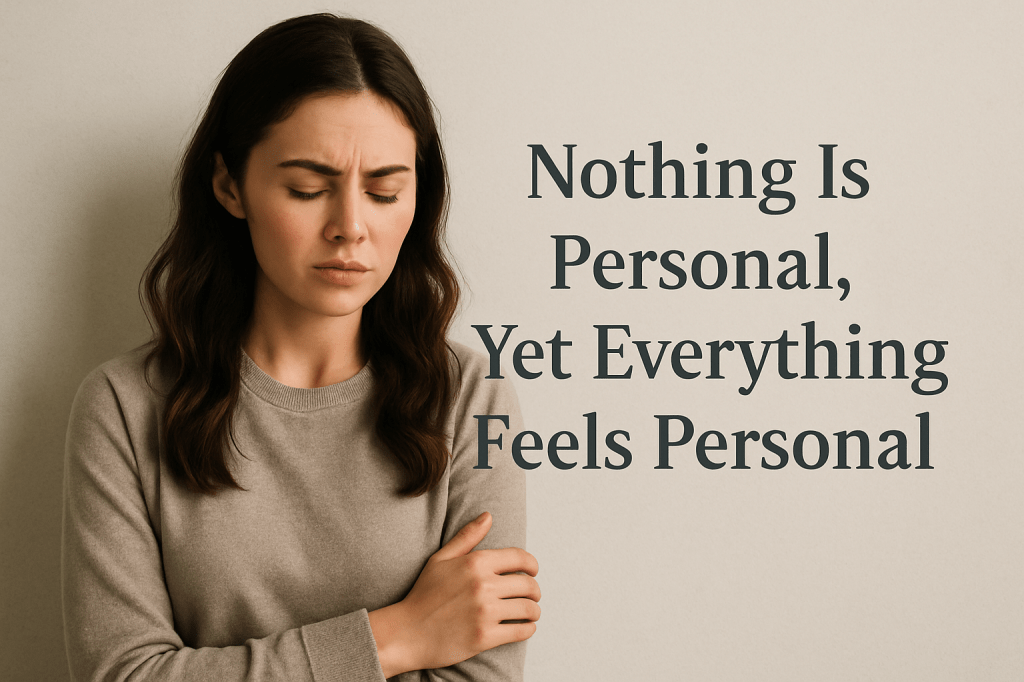
Nothing Is Personal, Yet Everything Feels Personal

Introduction

In everyday life, we often take words, actions, and silences to heart. A small change in behavior, a delayed response, or a critical comment can instantly make us question ourselves. Although logic tells us that most things are not meant personally, emotions often disagree. This inner conflict is what makes life feel heavy at times—nothing is personal, yet everything feels personal.

Why Everything Feels Personal

Human beings are emotional by nature. We connect experiences to our sense of self, which makes us interpret situations through a personal lens. When someone behaves differently, the mind immediately searches for a reason and often turns inward. This reaction is natural, but it is not always accurate.

Most Actions Reflect the Other Person

People respond based on their own stress, fears, priorities, and emotional capacity. Their words and behavior are shaped by their experiences, not by our value. Silence, distance, or harshness usually reflects what someone else is struggling with internally, even though it may feel directed at us.

How Overthinking Makes It Worse

When information is incomplete, the mind fills the gaps with assumptions. Overthinking turns neutral situations into personal failures. Emotions amplify this process, making us believe that we are the cause of every change or conflict, even when there is no clear evidence.

Understanding the Truth Without Ignoring Feelings

Saying “nothing is personal” does not mean dismissing emotions. Feelings are real and valid, but they do not always represent the full truth. The key is to acknowledge emotions without tying them to self-worth. This balance helps us stay grounded and emotionally healthy.

Letting Go of Unnecessary Emotional Weight

When we stop personalizing everything, relationships feel lighter. We react less and understand more. We learn to pause, reflect, and choose responses rather than acting from hurt. This shift reduces emotional exhaustion and brings inner calm.

Final Thoughts

Nothing is personal, yet everything feels personal because we care deeply. Growth begins when care is guided by awareness instead of assumption. By separating others’ actions from our self-worth, we create space for peace, clarity, and emotional resilience. What others do is about them; how we respond defines us.

Nothing is Personal or Permanent

Life is full of changes and experiences that remind us that nothing lasts forever, and that includes both the positive and negative moments. The concept of “nothing is personal or permanent” encourages us to live with a sense of detachment, resilience, and acceptance. Here’s a simple breakdown:

  1. Life Is Fluid
    • Everything around us, from relationships to situations, changes over time.
    • What feels permanent today may evolve or fade tomorrow.
  2. Don’t Take Things Personally
    • People’s actions or words are often more about them than about you.
    • Avoid internalizing others’ behavior, as it may be influenced by their own struggles and experiences.
  3. The Impermanence of Emotions
    • Both joy and sorrow are temporary. Emotions come and go, so learning to navigate them without being overwhelmed is crucial.
    • Realizing this helps reduce stress and anxiety, making it easier to let go of difficult feelings.
  4. Change Is Inevitable
    • Change is the only constant in life. Whether it’s in your career, relationships, or personal growth, change will come.
    • Embrace the ebb and flow of life rather than resisting it.
  5. Let Go of Attachments
    • The more we cling to people, places, or things, the more we may feel hurt when they change or leave.
    • Letting go doesn’t mean abandoning relationships but rather accepting that everything has its time.
  6. The Temporary Nature of Pain
    • Pain, disappointment, and challenges don’t last forever. Every hardship eventually comes to an end, and growth can come from it.
    • Trust that better days are ahead, even when things seem tough.
  7. The Power of Acceptance
    • By accepting the impermanence of life, we become more adaptable, resilient, and peaceful.
    • Acceptance allows us to find meaning in both the good and bad times.
  8. Freedom in Letting Go
    • Letting go of the need for control or perfection allows us to experience life more fully.
    • When we stop fearing change, we can embrace opportunities with openness and curiosity.
  9. Embrace the Present Moment
    • Since nothing is permanent, the present moment is all we truly have.
    • Focusing on the now allows us to live with intention and appreciate life as it unfolds.
  10. Live with Grace
    • Understanding that everything is temporary encourages us to live with grace—taking life one step at a time, letting go when necessary, and adapting as we go along.

By understanding that nothing is personal or permanent, we cultivate resilience, peace, and acceptance, making it easier to navigate the unpredictability of life.