
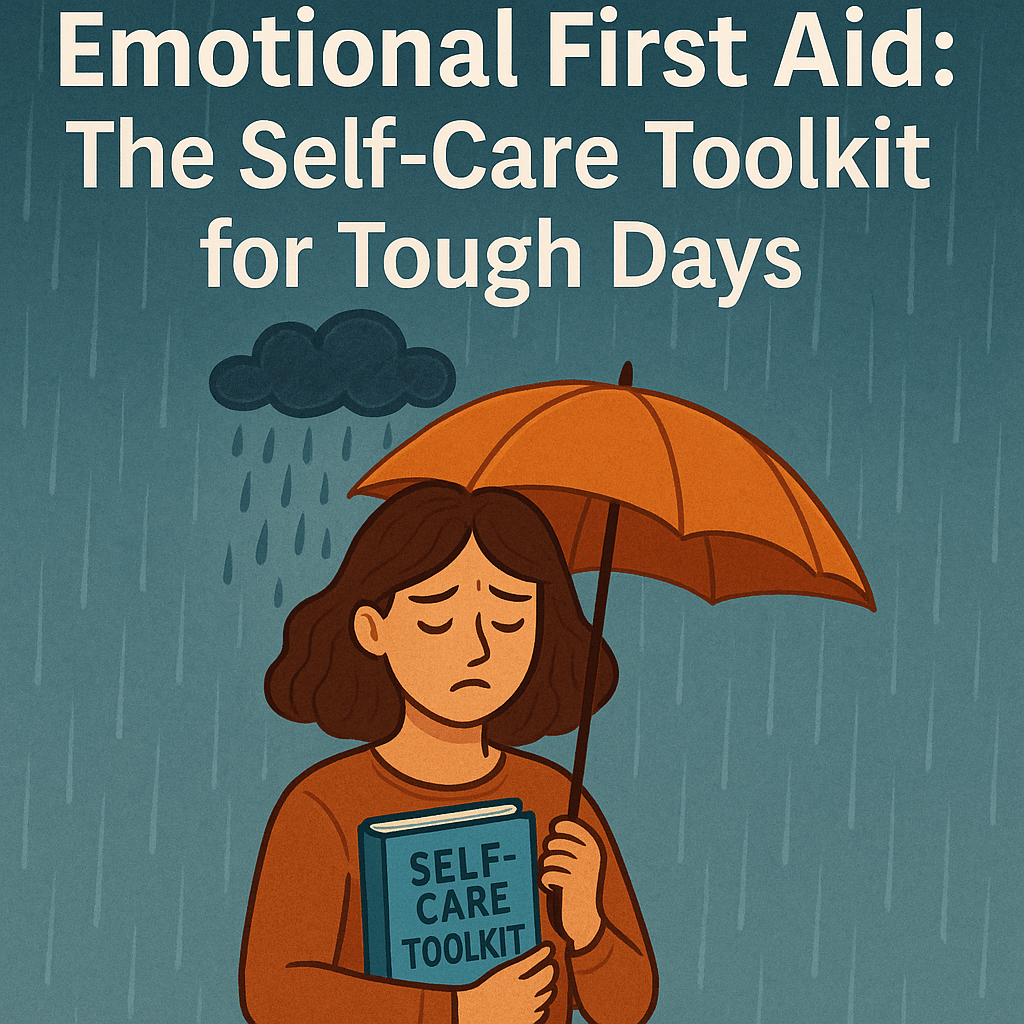
We all have tough days—when emotions run high and everything feels a bit too much. Just as we tend to physical injuries with first aid, we must also care for emotional wounds. That’s where emotional first aid comes in.
Think of it as your personal toolkit to handle sadness, stress, rejection, or burnout—before it builds into something heavier.
🧰 What Is Emotional First Aid?
- A set of simple, practical actions to care for your emotional well-being.
- Helps stop minor emotional pain from becoming chronic stress, anxiety, or depression.
- Encourages self-awareness, self-kindness, and timely support.
🛠️ Self-Care Toolkit for Tough Days
Here are powerful emotional first aid tools you can start using right away:
✅ 1. Name Your Emotion
- Ask yourself: “What am I feeling?”
- Naming emotions helps reduce their intensity and gives you clarity.
✅ 2. Breathe Deeply
- Try the 4-7-8 method: Inhale for 4 sec, hold for 7, exhale for 8.
- Deep breathing calms your nervous system.
✅ 3. Write It Out
- Journaling gives your emotions an outlet.
- Write freely—don’t edit, just express.
✅ 4. Talk to Someone
- Call a friend, mentor, or therapist.
- Sharing lightens emotional load and brings new perspective.
✅ 5. Move Your Body
- Stretch, go for a walk, or dance.
- Movement releases endorphins, your brain’s feel-good chemicals.
✅ 6. Say No Without Guilt
- Protect your peace.
- It’s okay to decline plans or take a break from responsibilities.
✅ 7. Treat Yourself Kindly
- Talk to yourself like you would to a loved one.
- Replace harsh self-talk with compassion.
✅ 8. Create a Comfort Kit
- Fill a box with things that soothe you: calming tea, scented candle, cozy socks, positive notes, or a journal.
- Use it when you’re emotionally low.
✅ 9. Digital Detox
- Step away from social media or stressful content.
- Give your mind space to rest and reset.
✅ 10. Practice Gratitude
- Note down 3 things you’re grateful for.
- Gratitude shifts focus from pain to hope.
✨ Additional Tools for Deeper Healing
✅ 11. Allow Yourself to Cry
- Crying is a natural way to release emotions.
- Don’t hold back—it’s a healthy outlet.
✅ 12. Use Positive Distractions
- Watch a feel-good show, paint, garden, or solve a puzzle.
- Helps redirect energy without ignoring emotions.
✅ 13. Use Affirmations
- Repeat gentle reminders:
- “This is temporary.”
- “I’ve gotten through worse.”
- “I am enough.”
✅ 14. Do One Small Task
- Fold clothes, clean a corner, or reply to one message.
- Builds momentum and a sense of accomplishment.
✅ 15. Visualize a Safe Place
- Close your eyes and imagine a peaceful spot—beach, mountains, or home.
- Visualization helps calm racing thoughts.
✅ 16. Unfollow Negativity
- Curate your social feed—mute or unfollow accounts that bring stress or comparison.
✅ 17. Limit Caffeine & Sugar
- Excess caffeine or sugar can trigger anxiety.
- Drink water or herbal teas instead.
✅ 18. Practice Mindfulness
- Sit quietly and focus on the now—your breath, sounds, and sensations.
- Reduces overthinking and brings clarity.
✅ 19. Try the 5-4-3-2-1 Grounding Technique
- 5 things you see
- 4 things you can touch
- 3 things you hear
- 2 things you smell
- 1 thing you taste
- A powerful method to calm anxiety.
✅ 20. Remind Yourself: This Too Shall Pass
- Emotions are like waves—they come, peak, and fade.
- Ride them with patience and self-trust.
🧡 Make Your Personal Emotional First Aid Plan
Put together your own toolkit with:
- A calming playlist
- A list of affirmations
- Emergency contact numbers
- A gratitude journal
- Comforting items (a book, chocolate, art supplies, etc.)
💬 Final Thought
You deserve care—even more so on your hardest days. Emotional first aid isn’t about “fixing” yourself; it’s about showing up with compassion, understanding, and gentle action. Let your emotional wellness matter as much as your physical health—because healing begins with kindness to self.


 Pioneer Edge