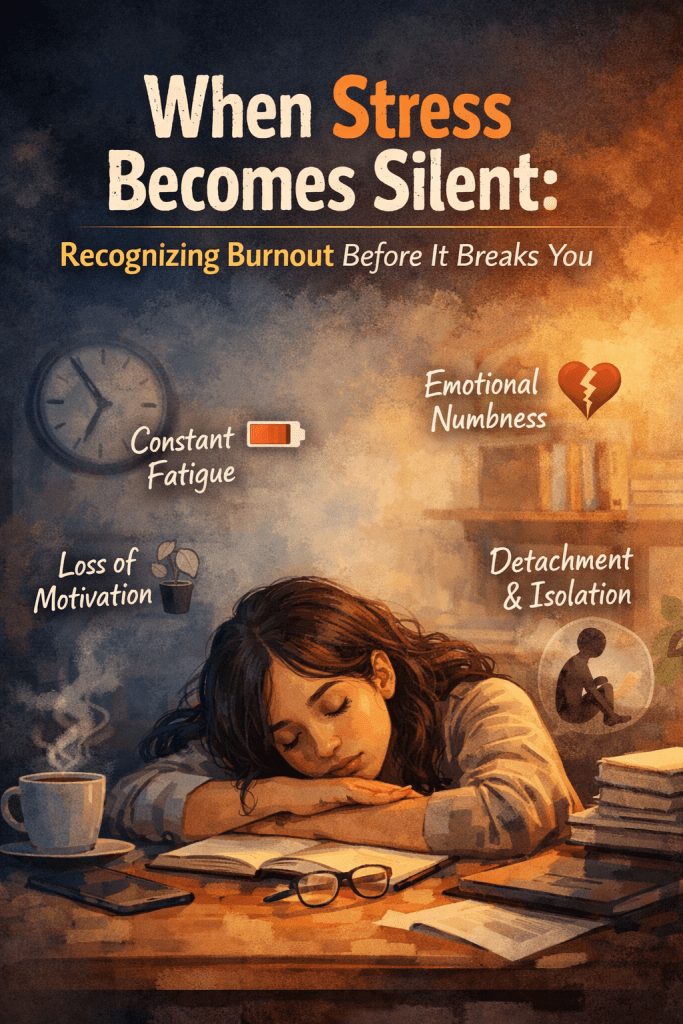
When Stress Becomes Silent: Recognizing Burnout Before It Breaks You

Introduction

Stress is often visible. We feel tired, worried, or overwhelmed and we talk about it.
Burnout, however, is different. It grows quietly. Many people do not realize they are burned out until their health, motivation, or relationships begin to suffer. Understanding early signs of burnout can help us take action before it becomes serious.


What Is Silent Burnout?

Silent burnout happens when prolonged stress is ignored or normalized. A person may continue working, meeting responsibilities, and appearing “fine” while internally feeling drained and disconnected.

It is not sudden. It develops slowly due to continuous pressure without enough rest, emotional support, or recovery.


Early Signs You Should Not Ignore

  • Constant tiredness even after rest
  • Loss of interest in work or daily activities
  • Feeling emotionally numb or detached
  • Irritability over small issues
  • Difficulty concentrating or making decisions
  • Frequent headaches, body pain, or sleep problems
  • Feeling unappreciated or hopeless

These signs are often dismissed as “just stress,” but they may indicate burnout.


Why Burnout Goes Unnoticed

  • We get used to being busy all the time
  • We believe taking rest is a weakness
  • We prioritize work over health
  • We feel guilty for slowing down
  • Others praise us for “handling everything”

Over time, this mindset makes burnout invisible.


Difference Between Stress and Burnout

  • Stress: Too many demands, but you still care
  • Burnout: Emotional exhaustion, loss of motivation, and feeling empty

Stress makes you feel overloaded. Burnout makes you feel drained and disconnected.


How to Prevent Burnout Early

  • Take regular breaks without guilt
  • Set realistic limits on work and responsibilities
  • Learn to say no when needed
  • Talk openly about how you feel
  • Prioritize sleep, nutrition, and physical activity
  • Do at least one activity daily that brings calm or joy

Small changes practiced consistently make a big difference.


When to Seek Support

If exhaustion, sadness, or detachment lasts for weeks, professional help is important. Speaking to a counselor, mentor, or healthcare professional is a sign of strength, not weakness.


Final Thoughts

Burnout does not announce itself loudly. It whispers through fatigue, silence, and loss of joy. Listening early can protect your mental and physical well-being.

Taking care of yourself is not optional. It is essential for long-term success and a healthy life.

From Burnout to Balance: Practical Self-Care Tips for Busy Professionals

1. Understand Burnout:

  • Recognize the Signs: Common indicators of burnout include persistent fatigue, irritability, lack of motivation, and feelings of inadequacy. Acknowledge these signs early to address them effectively.
  • Know It’s Common: Burnout is prevalent in high-stress environments. Understanding that many experience it can reduce feelings of isolation.

2. Prioritize Self-Care:

  • Make It Non-Negotiable: Schedule self-care just like you would a work meeting. Treat this time as essential for your well-being.
  • Daily Breaks: Aim for short breaks every hour. Use this time to stretch, hydrate, or take a short walk.

3. Set Boundaries:

  • Learn to Say No: Evaluate new commitments critically. If they do not align with your priorities, it’s okay to decline.
  • Create Clear Boundaries: Define your work hours and stick to them. Communicate these boundaries to your colleagues and supervisors.

4. Practice Mindfulness:

  • Incorporate Techniques: Start with just five minutes of meditation or deep breathing exercises daily.
  • Focus on the Present: Engage in activities mindfully, whether it’s eating, walking, or even working. This can reduce stress and enhance focus.

5. Stay Active:

  • Find Activities You Enjoy: Whether it’s yoga, dancing, or jogging, choose something that brings you joy. This makes it easier to stay consistent.
  • Short Workouts Matter: Even 10-15 minutes of exercise can boost mood and energy.

6. Get Quality Sleep:

  • Aim for 7-9 Hours: Prioritize sleep as a cornerstone of health. Lack of sleep exacerbates stress and burnout.
  • Establish a Bedtime Routine: Wind down with calming activities like reading or gentle stretches. Avoid screens at least an hour before bed.

7. Foster Connections:

  • Maintain Relationships: Regularly connect with friends and family, whether through calls, texts, or in-person meetings. Social support is vital for mental health.
  • Seek Professional Networks: Join groups or associations in your field to share experiences and gain support from peers.

8. Take Time Off:

  • Use Vacation Days: Time away from work can reset your mindset and reduce stress.
  • Regular Mini-Breaks: Even a day off every few months can help recharge your batteries and prevent burnout.

9. Limit Screen Time:

  • Designate Tech-Free Periods: Set boundaries around technology use, especially during meals or family time, to enhance relationships and relaxation.
  • Unplug Before Bed: Establish a routine that includes shutting down devices at least an hour before sleep to improve sleep quality.

10. Reflect and Adjust:

  • Regular Assessments: Take time weekly or monthly to reflect on your workload and emotional health. Adjust your routines as needed.
  • Be Open to Change: If certain practices aren’t working, don’t hesitate to try new strategies or seek professional guidance, like therapy or coaching.

Conclusion: Transitioning from burnout to balance is a continuous journey. By actively implementing these self-care strategies, busy professionals can create a more sustainable and fulfilling work-life balance. Prioritize your well-being and remember that taking care of yourself ultimately enhances your productivity and happiness.