Peaceful Eternal Life

🌸 Introduction

Everyone seeks peace — not just in moments, but in life itself. A peaceful eternal life is about living with calmness, clarity, and contentment that lasts beyond temporary highs and lows. It’s not about how long we live, but how peacefully we live.


☀️ 1. Peace Begins Within

  • True peace starts from the mind and heart, not from the outside world.
  • Calm thoughts create calm actions.
  • When you learn to quiet your inner noise, life automatically feels lighter.

“Peace comes from within. Do not seek it without.” – Buddha


🌊 2. Let Go of What You Can’t Control

  • Life becomes peaceful when we stop fighting every situation.
  • Acceptance is the first step to inner harmony.
  • Control your reactions, not the world around you.

“The greatest weapon against stress is our ability to choose one thought over another.” – William James


🌿 3. Live with Kindness and Compassion

  • A peaceful heart is a kind heart.
  • Helping others, forgiving mistakes, and spreading love bring eternal satisfaction.
  • Compassion connects us to something divine and everlasting.

🌤 4. Stay Grateful Every Day

  • Gratitude transforms ordinary days into blessings.
  • Appreciate simple joys — sunrise, laughter, loved ones, good health.
  • Gratitude invites peace and pushes away negativity.

“Gratitude turns what we have into enough.” – Anonymous


🌙 5. Connect with the Spiritual Side

  • Meditation, prayer, or quiet reflection can calm your soul.
  • Believe that life has a higher purpose beyond material success.
  • Spiritual awareness helps you feel eternal peace, beyond fear or loss.

🌻 6. Live in Harmony with Nature

  • Nature teaches balance and serenity.
  • Spend time under the sky, near trees or water — it heals silently.
  • When you live close to nature, you live close to peace.

🌈 7. Simplicity is the Secret

  • The less you chase, the more you rest.
  • Simplify your wants, declutter your mind, and value peace over possessions.
  • Eternal peace comes when you stop competing and start living mindfully.

🌟 Conclusion

Peaceful eternal life isn’t a faraway dream — it’s a state of being we can nurture every day.
It’s in our thoughts, choices, and the love we share.
When you live with peace in your heart, you live eternally — even in moments.

“Peace is not the destination, it is the way.” – Thich Nhat Hanh

Calmness and Clarity in Everyday Life

🌿 Introduction

Life today often feels rushed, noisy, and overwhelming. Between responsibilities, technology, and constant demands, our minds rarely find rest. Yet, calmness and clarity are not luxuries—they are essential for balance, decision-making, and happiness. With simple practices, we can bring peace into our everyday life.


🌸 Simple Ways to Cultivate Calmness and Clarity

  1. Start Your Day Slowly
    • Avoid rushing into your phone or work.
    • Begin with a few minutes of quiet breathing, stretching, or gratitude.
  2. Practice Mindful Breathing
    • A few deep breaths can instantly reduce stress.
    • Breathing anchors the mind and helps you focus better.
  3. Declutter Your Surroundings
    • A clean space clears mental clutter.
    • Keep only what is useful and meaningful around you.
  4. Take Short Breaks
    • Step away from work, screens, or noise.
    • Even 5 minutes of silence refreshes the mind.
  5. Limit Information Overload
    • Too much news, social media, or notifications creates anxiety.
    • Be selective with what you consume daily.
  6. Spend Time in Nature
    • Walking in a park, sitting under a tree, or listening to birds brings instant calm.
    • Nature naturally clears the mind.
  7. Write It Out
    • Journaling helps release confusion and emotions.
    • Clarity often comes when thoughts are on paper.
  8. Stay Present
    • Worrying about the future or replaying the past disturbs peace.
    • Focus on what you can do right now.
  9. Practice Gratitude
    • Recognize small blessings daily.
    • Gratitude shifts the mind from chaos to calm.
  10. End the Day with Reflection
    • Review your day with kindness, not judgment.
    • Let go of stress before you sleep.

🌟 Conclusion

Calmness and clarity don’t come from escaping life—they come from how we live each moment. By slowing down, simplifying, and staying present, we can handle challenges with peace instead of pressure. A calm mind sees clearly, and a clear mind lives fully.

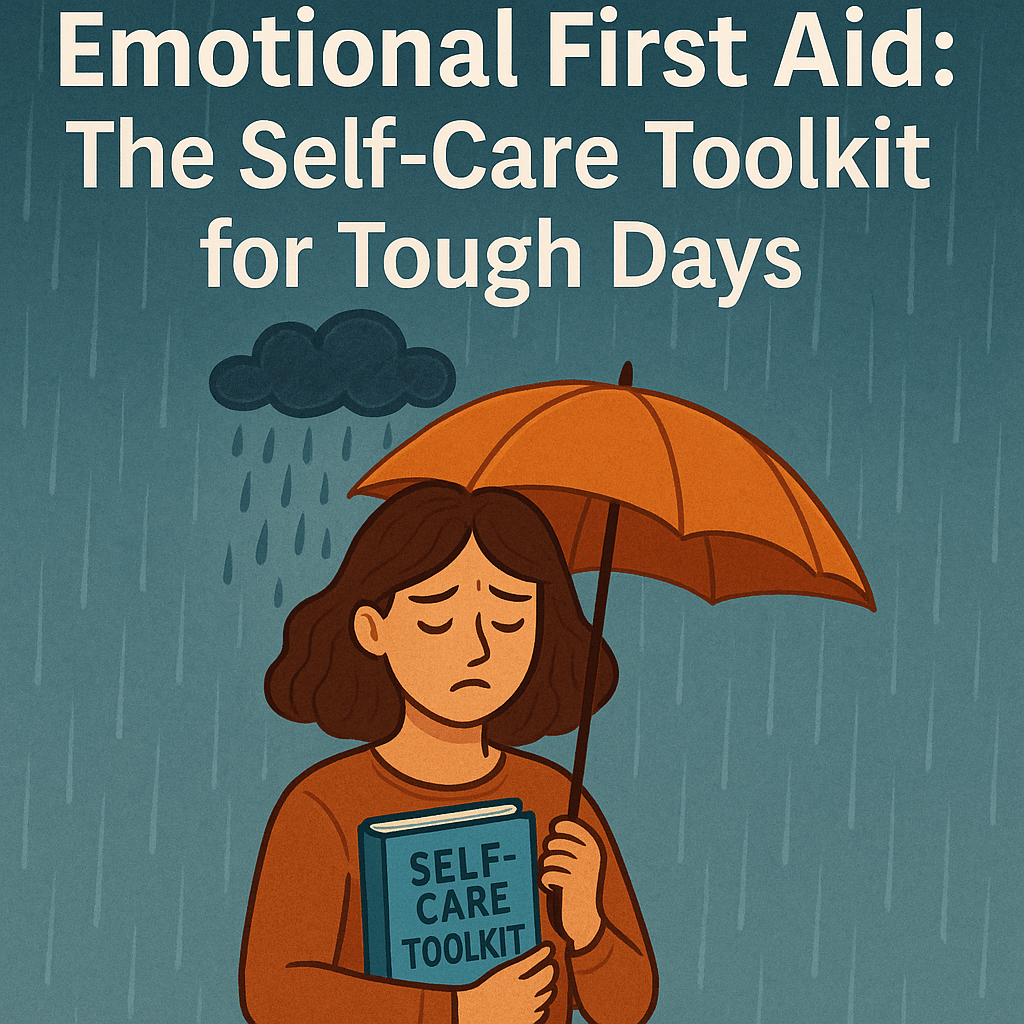
🌧️ Emotional First Aid: The Self-Care Toolkit for Tough Days

We all have tough days—when emotions run high and everything feels a bit too much. Just as we tend to physical injuries with first aid, we must also care for emotional wounds. That’s where emotional first aid comes in.

Think of it as your personal toolkit to handle sadness, stress, rejection, or burnout—before it builds into something heavier.


🧰 What Is Emotional First Aid?

  • A set of simple, practical actions to care for your emotional well-being.
  • Helps stop minor emotional pain from becoming chronic stress, anxiety, or depression.
  • Encourages self-awareness, self-kindness, and timely support.

🛠️ Self-Care Toolkit for Tough Days

Here are powerful emotional first aid tools you can start using right away:


✅ 1. Name Your Emotion

  • Ask yourself: “What am I feeling?”
  • Naming emotions helps reduce their intensity and gives you clarity.

✅ 2. Breathe Deeply

  • Try the 4-7-8 method: Inhale for 4 sec, hold for 7, exhale for 8.
  • Deep breathing calms your nervous system.

✅ 3. Write It Out

  • Journaling gives your emotions an outlet.
  • Write freely—don’t edit, just express.

✅ 4. Talk to Someone

  • Call a friend, mentor, or therapist.
  • Sharing lightens emotional load and brings new perspective.

✅ 5. Move Your Body

  • Stretch, go for a walk, or dance.
  • Movement releases endorphins, your brain’s feel-good chemicals.

✅ 6. Say No Without Guilt

  • Protect your peace.
  • It’s okay to decline plans or take a break from responsibilities.

✅ 7. Treat Yourself Kindly

  • Talk to yourself like you would to a loved one.
  • Replace harsh self-talk with compassion.

✅ 8. Create a Comfort Kit

  • Fill a box with things that soothe you: calming tea, scented candle, cozy socks, positive notes, or a journal.
  • Use it when you’re emotionally low.

✅ 9. Digital Detox

  • Step away from social media or stressful content.
  • Give your mind space to rest and reset.

✅ 10. Practice Gratitude

  • Note down 3 things you’re grateful for.
  • Gratitude shifts focus from pain to hope.

✨ Additional Tools for Deeper Healing

✅ 11. Allow Yourself to Cry

  • Crying is a natural way to release emotions.
  • Don’t hold back—it’s a healthy outlet.

✅ 12. Use Positive Distractions

  • Watch a feel-good show, paint, garden, or solve a puzzle.
  • Helps redirect energy without ignoring emotions.

✅ 13. Use Affirmations

  • Repeat gentle reminders:
    • “This is temporary.”
    • “I’ve gotten through worse.”
    • “I am enough.”

✅ 14. Do One Small Task

  • Fold clothes, clean a corner, or reply to one message.
  • Builds momentum and a sense of accomplishment.

✅ 15. Visualize a Safe Place

  • Close your eyes and imagine a peaceful spot—beach, mountains, or home.
  • Visualization helps calm racing thoughts.

✅ 16. Unfollow Negativity

  • Curate your social feed—mute or unfollow accounts that bring stress or comparison.

✅ 17. Limit Caffeine & Sugar

  • Excess caffeine or sugar can trigger anxiety.
  • Drink water or herbal teas instead.

✅ 18. Practice Mindfulness

  • Sit quietly and focus on the now—your breath, sounds, and sensations.
  • Reduces overthinking and brings clarity.

✅ 19. Try the 5-4-3-2-1 Grounding Technique

  • 5 things you see
  • 4 things you can touch
  • 3 things you hear
  • 2 things you smell
  • 1 thing you taste
  • A powerful method to calm anxiety.

✅ 20. Remind Yourself: This Too Shall Pass

  • Emotions are like waves—they come, peak, and fade.
  • Ride them with patience and self-trust.

🧡 Make Your Personal Emotional First Aid Plan

Put together your own toolkit with:

  • A calming playlist
  • A list of affirmations
  • Emergency contact numbers
  • A gratitude journal
  • Comforting items (a book, chocolate, art supplies, etc.)

💬 Final Thought

You deserve care—even more so on your hardest days. Emotional first aid isn’t about “fixing” yourself; it’s about showing up with compassion, understanding, and gentle action. Let your emotional wellness matter as much as your physical health—because healing begins with kindness to self.