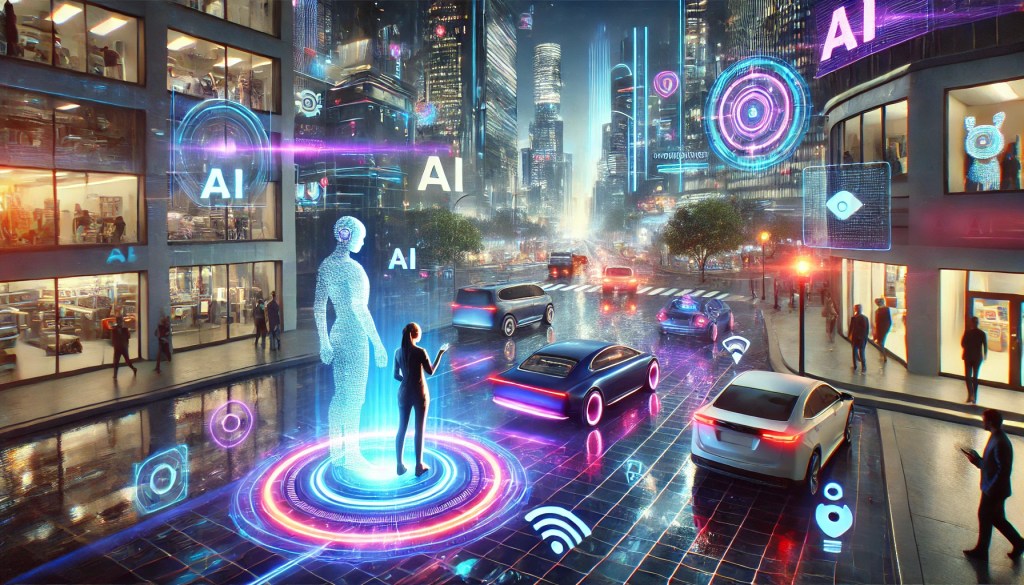
The Impact of AI on Everyday Life

AI is changing the way we live and interact with the world. From simple tasks to complex decisions, its influence is growing. Here’s how AI is making an impact on our everyday lives:

  1. Smart Assistants and Home Automation
    AI-powered devices like Amazon Alexa, Google Assistant, and Apple’s Siri help us manage tasks at home.
    • Example: You can ask Siri to play your favorite song, or Alexa to set reminders, control smart lights, and even order groceries.
  2. Personalized Recommendations
    AI algorithms track your preferences to recommend products, music, movies, and more.
    • Example: Netflix uses AI to suggest shows based on what you’ve watched before, while Spotify curates playlists to match your listening habits.
  3. Healthcare Advancements
    AI is revolutionizing healthcare by diagnosing diseases, managing patient records, and even recommending treatments.
    • Example: AI systems like IBM Watson help doctors identify cancerous cells, speeding up diagnosis and improving accuracy.
  4. Transportation and Navigation
    AI is at the heart of self-driving cars, and even our navigation apps rely on AI for real-time traffic updates.
    • Example: Google Maps uses AI to analyze traffic patterns and suggest the fastest route, while companies like Tesla are working on fully autonomous vehicles.
  5. Customer Support and Chatbots
    Many businesses use AI-powered chatbots to handle customer inquiries and provide 24/7 support.
    • Example: When you visit a website and get an instant response to your query, chances are you’re chatting with an AI bot, like those used by banks or e-commerce sites.
  6. Finance and Banking
    AI is used for fraud detection, loan approvals, and even personalized financial advice.
    • Example: Many banks use AI to detect unusual transactions that may indicate fraud and alert customers right away.
  7. Social Media and Content Creation
    AI influences what content we see on social media, from ads to news feeds.
    • Example: Platforms like Facebook and Instagram use AI to analyze your interactions and suggest posts or ads tailored to your interests.
  8. Voice-to-Text and Translation Tools
    AI makes it easier to communicate across languages and convert speech into text.
    • Example: Google Translate uses AI to instantly translate text and voice from one language to another, helping travelers and businesses communicate globally.
  9. Retail and E-Commerce
    AI helps e-commerce companies optimize inventory, predict demand, and offer personalized shopping experiences.
    • Example: Online stores like Amazon suggest products based on your previous searches, while also using AI to manage stock levels and improve delivery times.
  10. Entertainment and Gaming
    AI is increasingly used to enhance gaming experiences and create more dynamic storylines.
    • Example: In video games, AI can control non-playable characters (NPCs) to create more realistic and challenging environments.

Conclusion:
AI is not just a futuristic concept; it’s already integrated into many aspects of our daily lives. From helping us at home to transforming industries like healthcare and finance, AI continues to make tasks easier and more efficient. The more we embrace its potential, the more AI will continue to shape our world.

Unmasking Bias: Seeing Through the Blind Spot

We often believe we see the world clearly, making judgments based on facts and logic. However, the reality is far more complex. Our minds are susceptible to biases that can cloud our judgment and distort our perception of reality. One of the most insidious of these biases is the “biased blind spot,” where we fail to recognize our own biases while readily identifying them in others.

  1. The Nature of Bias:
    • Bias refers to the inclination or prejudice for or against something or someone, often based on factors like race, gender, or personal experiences.
    • Biases can be implicit (unconscious) or explicit (conscious) and influence our thoughts, feelings, and behaviors in subtle ways.
  2. The Blind Spot Effect:
    • The biased blind spot, also known as the “bias blind spot,” describes our tendency to recognize biases in others while failing to acknowledge our own.
    • This blind spot can lead us to believe that we are objective and impartial, despite evidence to the contrary.
  3. Types of Bias:
    • Confirmation Bias: We seek out information that confirms our existing beliefs and ignore evidence that contradicts them.
    • Attribution Bias: We attribute our successes to internal factors (skill, talent) and our failures to external factors (luck, circumstances).
    • In-group Bias: We favor members of our own group over those outside it, leading to favoritism and prejudice.
    • Implicit Bias: Unconscious attitudes or stereotypes that influence our understanding, actions, and decisions.
  4. Impacts on Decision-Making:
    • The biased blind spot can distort our decision-making processes, leading to flawed judgments and missed opportunities.
    • In professional settings, biases can affect hiring, promotions, and performance evaluations, perpetuating inequalities and hindering diversity and inclusion efforts.
  5. Overcoming the Blind Spot:
    • Recognizing and acknowledging our biases is the first step toward overcoming the biased blind spot.
    • Engaging in self-reflection, seeking feedback from others, and considering alternative perspectives can help mitigate the influence of biases.
  6. Cultivating Awareness:
    • Education and training programs can raise awareness of biases and their impact on decision-making.
    • Creating environments that encourage open dialogue and constructive criticism can foster a culture of inclusivity and accountability.
  7. Embracing Diversity:
    • Embracing diversity and inclusion fosters innovation, creativity, and resilience within organizations and communities.
    • By valuing diverse perspectives and experiences, we can challenge our own biases and broaden our understanding of the world.
  8. Conclusion:
    • The biased blind spot reminds us that none of us are immune to biases, no matter how rational or well-intentioned we may be.
    • By acknowledging our biases and actively working to counteract them, we can strive for fairness, equality, and empathy in our interactions and decision-making processes.
    • Let’s embrace the journey of self-awareness and continuous learning, recognizing that overcoming biases is a collective effort that benefits us all.