
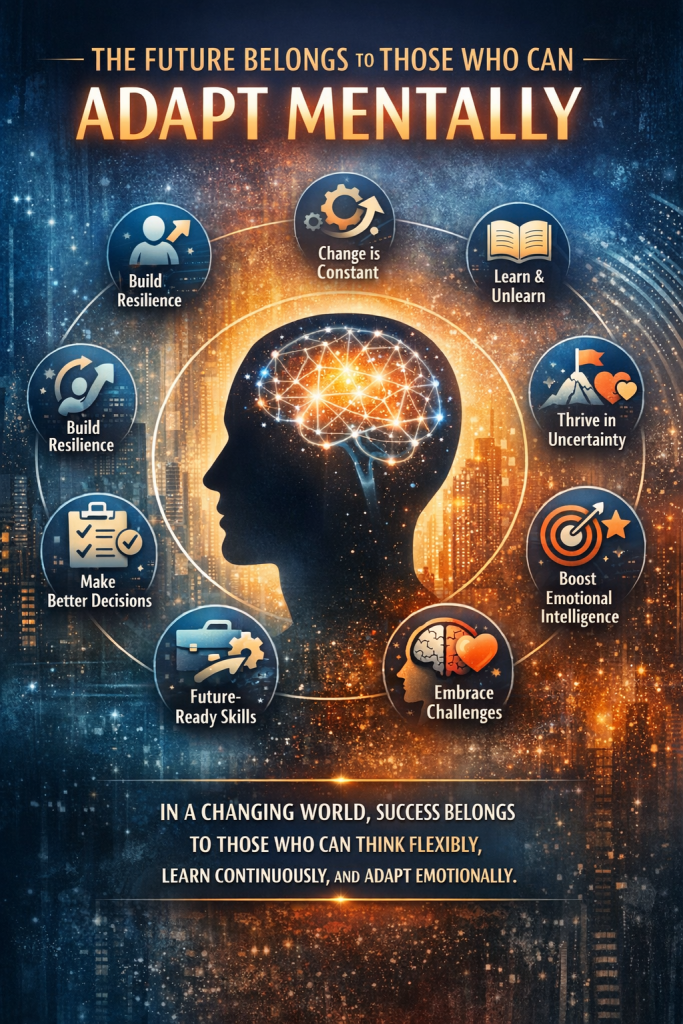
In a rapidly changing world, success is no longer determined only by intelligence, talent, or experience. The ability to adapt mentally has become the most important life skill. Below are simple, clear points explaining why mental adaptability shapes the future.
1. Change Is Constant, Not Optional
Technology, workplaces, and lifestyles are evolving faster than ever. Those who mentally resist change experience stress and stagnation, while adaptable minds learn to adjust and move forward.
2. Mental Flexibility Enables Faster Learning
Adaptable individuals are open to unlearning old habits and acquiring new skills. This learning mindset allows them to stay relevant in education, careers, and personal growth.
3. Resilient Minds Handle Uncertainty Better
The future is unpredictable. Mental adaptability helps individuals remain calm during uncertainty, view challenges as temporary, and respond with problem-solving rather than panic.
4. Adaptability Strengthens Emotional Intelligence
Mentally adaptable people regulate emotions effectively, accept feedback positively, and adjust behavior based on situations. This improves relationships and leadership effectiveness.
5. Fixed Mindsets Limit Growth
A rigid mindset clings to comfort zones and fears failure. In contrast, adaptable minds see failure as feedback and change as an opportunity for improvement.
6. Mental Adaptation Supports Well-Being
Being mentally flexible reduces stress, anxiety, and burnout. Acceptance and adjustment protect mental health in high-pressure environments.
7. Future Careers Demand Cognitive Agility
Jobs of the future will require continuous upskilling. Mental adaptability enables individuals to transition across roles, industries, and technologies with confidence.
8. Adaptable Minds Make Better Decisions
Open-minded thinking allows individuals to evaluate situations objectively, consider alternatives, and make informed decisions even with limited information.
9. Growth Begins with Self-Awareness
Understanding one’s thoughts, beliefs, and emotional patterns is the first step toward mental adaptability. Awareness creates choice rather than automatic reactions.
10. Adaptability Is a Trainable Skill
Mental flexibility can be developed through reflection, lifelong learning, mindfulness, and embracing new experiences.
Conclusion
The future will not favor the strongest or the smartest, but those who can think flexibly, learn continuously, and adapt emotionally. Mental adaptability is no longer optional—it is the foundation for sustainable success and well-being in an uncertain world.
 Pioneer Edge