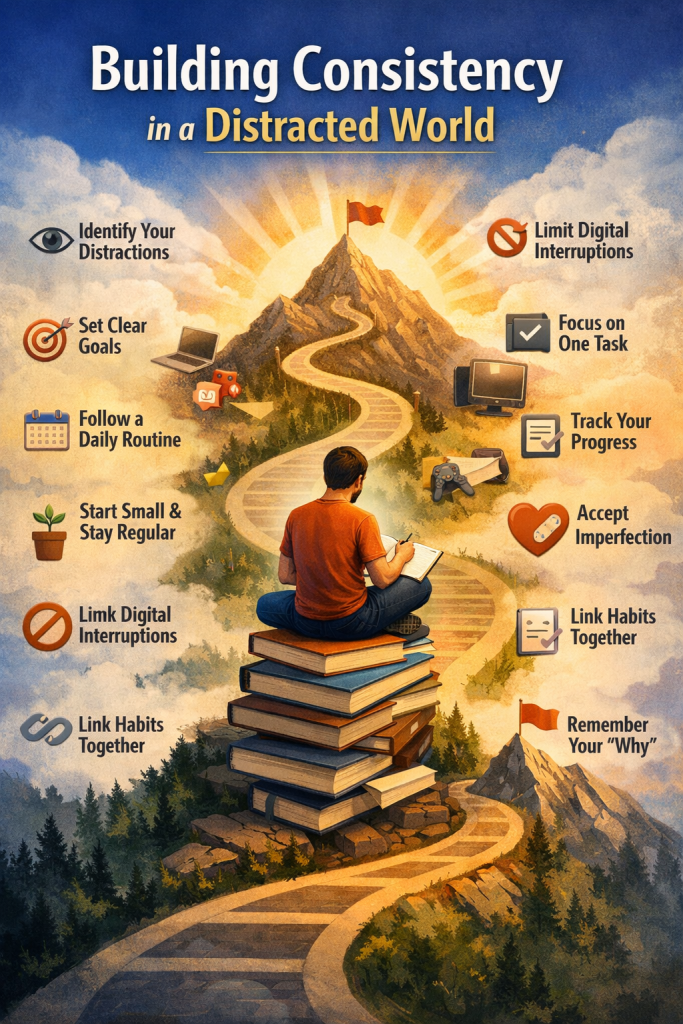
Building Consistency in a Distracted World

In today’s fast-paced digital environment, maintaining consistency has become increasingly difficult. Constant notifications, information overload, and competing priorities often disrupt focus. However, consistency remains a critical factor for personal growth, productivity, and long-term success. The following simple points explain how consistency can be built despite daily distractions.


1. Understand What Distracts You

Identify the main sources of distraction in your daily routine, such as mobile phones, social media, or multitasking. Awareness is the first step toward control.


2. Set Clear and Realistic Goals

Consistency improves when goals are specific and achievable. Break large goals into small, manageable tasks to avoid feeling overwhelmed.


3. Create a Fixed Routine

A regular schedule helps train the mind. Performing tasks at the same time each day builds habit strength and reduces decision fatigue.


4. Start Small but Stay Regular

Small actions done daily are more effective than occasional intense efforts. Even limited progress, when repeated, leads to meaningful results over time.


5. Limit Digital Interruptions

Turn off unnecessary notifications and allocate specific times for checking messages or social media. Controlled usage improves concentration.


6. Focus on One Task at a Time

Multitasking reduces efficiency and consistency. Single-tasking improves quality of work and builds discipline.


7. Track Your Progress

Maintain a simple checklist or journal to record daily efforts. Tracking creates accountability and motivates continuation.


8. Accept Imperfection and Continue

Missing a day is not failure. The key to consistency is returning to the routine without guilt or self-criticism.


9. Build Supportive Habits

Link new habits to existing ones, such as reading after dinner or planning the next day before sleeping. Habit stacking strengthens consistency.


10. Remember Your Purpose

Revisit the reason behind your goals. A clear purpose provides motivation during periods of low energy or distraction.


Conclusion

In a distracted world, consistency is not about perfection but persistence. By making small, intentional changes and staying committed, anyone can develop consistent habits that lead to long-term success and personal satisfaction.

Zero-Waste Living: A Comprehensive Guide to Reducing Your Environmental Impact

In today’s environmentally-conscious world, the concept of zero-waste living has emerged as a powerful approach to minimizing our ecological footprint and fostering a healthier planet. It goes beyond mere recycling, embodying a mindset committed to reducing waste at every stage of life. This comprehensive guide delves into the principles of zero-waste living and offers practical advice to help you begin this eco-friendly journey.

Understanding Zero-Waste Living:
Zero-waste living is a philosophy aimed at sending as little waste as possible to landfills or incinerators. It involves practices like reducing, reusing, recycling, and composting to divert waste from the environment. By embracing these principles, individuals can conserve resources, curb pollution, and promote sustainability.

Practical Tips for Zero-Waste Living:

Conduct a Waste Audit: Start by evaluating your current waste habits to identify areas for improvement.

Cut Down on Single-Use Plastics: Reduce your reliance on disposable plastics by opting for reusable alternatives like cloth bags and stainless steel bottles.

Embrace Minimalism: Simplify your life by de-cluttering and prioritizing quality over quantity.

Make Smart Purchases: Choose products with minimal packaging and buy in bulk to reduce waste.

Compost Organic Waste: Set up a compost bin for food scraps to minimize landfill waste and create nutrient-rich soil.

Repurpose and Up-cycle: Give old items new life by finding creative ways to reuse them.

Invest in Reusable Products: Replace disposable items with reusable options.

Support Sustainable Brands: Choose products from companies that prioritize sustainability and eco-friendly practices.

Minimize Food Waste: Plan meals, store leftovers properly, and compost food scraps that cannot be eaten.

Educate and Advocate: Share your zero-waste journey with others and encourage them to make sustainable choices too.

Conclusion:
Transitioning to zero-waste living may seem challenging, but every small change contributes to a greener future. By implementing these practical strategies, you can reduce your environmental impact and promote sustainability in your daily life. Together, let’s work towards a world where waste is minimized, resources are conserved, and our planet thrives.