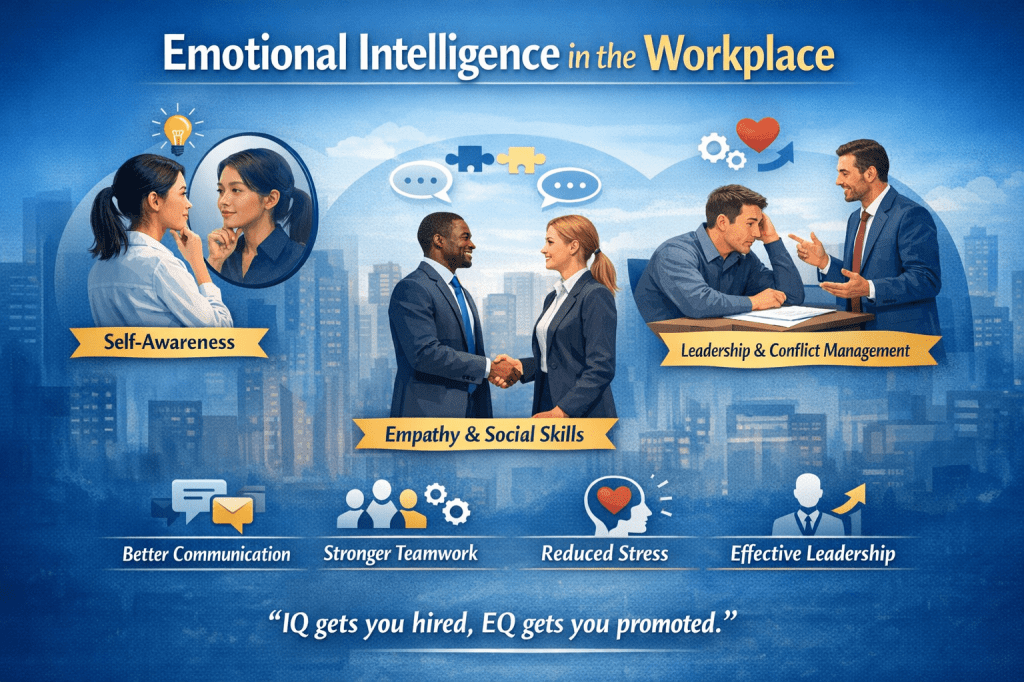
Emotional Intelligence in the Workplace

Emotional Intelligence (EI) is the ability to understand, manage, and use emotions effectively — both your own and others’.
In today’s workplace, technical skills alone are not enough. Emotional intelligence determines how well we lead, communicate, and collaborate.


🔹 1. What is Emotional Intelligence?

Emotional Intelligence includes:

  • Self-awareness – Understanding your own emotions
  • Self-regulation – Controlling impulsive reactions
  • Motivation – Staying driven toward goals
  • Empathy – Understanding others’ feelings
  • Social skills – Building healthy relationships

“IQ may get you hired, but EQ gets you promoted.”


🔹 2. Why Emotional Intelligence Matters at Work

  • Improves communication
  • Reduces workplace conflicts
  • Builds stronger teamwork
  • Enhances leadership effectiveness
  • Increases job satisfaction

Employees with high EI create a positive and respectful work culture.

“People may forget what you said, but they will never forget how you made them feel.”


🔹 3. Emotional Intelligence in Leadership

A leader with emotional intelligence:

  • Listens actively
  • Handles criticism calmly
  • Encourages team members
  • Resolves conflicts fairly
  • Inspires trust

Such leaders create psychological safety within teams.

“Leadership is not about control, it is about connection.”


🔹 4. Emotional Intelligence and Teamwork

Teams function better when members:

  • Respect different opinions
  • Manage disagreements maturely
  • Support each other during stress
  • Communicate clearly

High EI reduces misunderstandings and strengthens cooperation.

“Strong teams are built on understanding, not just skill.”


🔹 5. How to Improve Emotional Intelligence

  • Practice self-reflection daily
  • Pause before reacting
  • Develop active listening skills
  • Seek constructive feedback
  • Show empathy in conversations

Small behavioral changes can create a big professional impact.

“Emotional intelligence is not about being emotional; it is about being emotionally smart.”


🔹 Conclusion

In modern workplaces, success depends not only on knowledge but also on emotional maturity. Emotional intelligence builds trust, strengthens relationships, and drives long-term performance.

“Your attitude and emotional control define your professional success more than your technical ability.”

Boost Your Emotional Intelligence: Strategies for Personal and Professional Growth

Emotional Intelligence: Why It Matters and How to Improve It

Emotional Intelligence (EI) is the ability to understand and manage your own emotions, as well as recognize and influence the emotions of others. Here’s why it matters and how you can improve it:

Why Emotional Intelligence Matters

  1. Better Relationships
    • Quote: “The greatest ability in business is to get along with others and to influence their actions.” – John Hancock
    • Understanding emotions helps you connect with others, fostering strong personal and professional relationships.
  2. Improved Communication
    • Quote: “Effective communication is 20% what you know and 80% how you feel about what you know.” – Jim Rohn
    • High EI enables clearer and more empathetic communication, reducing misunderstandings and conflicts.
  3. Enhanced Decision-Making
    • Quote: “Emotions can get in the way or get you on the way.” – Mavis Mazhura
    • Being aware of your emotions can help you make more balanced and thoughtful decisions.
  4. Increased Self-Awareness
    • Quote: “Knowing yourself is the beginning of all wisdom.” – Aristotle
    • Understanding your emotions and their impact helps you grow and improve in both personal and professional areas.
  5. Better Stress Management
    • Quote: “It’s not stress that kills us, it is our reaction to it.” – Hans Selye
    • High EI helps you manage stress better by recognizing and addressing your emotional responses.

How to Improve Emotional Intelligence

  1. Practice Self-Awareness
    • Reflect on your emotions and how they influence your thoughts and actions.
    • Tip: Keep a journal to track your emotional responses and identify patterns.
  2. Develop Self-Regulation
    • Learn to control your emotional impulses and think before acting.
    • Tip: Practice deep breathing or meditation to stay calm in stressful situations.
  3. Enhance Empathy
    • Try to understand and share the feelings of others.
    • Tip: Listen actively and ask open-ended questions to better understand others’ perspectives.
  4. Improve Social Skills
    • Work on building and maintaining healthy relationships.
    • Tip: Practice effective communication, show appreciation, and resolve conflicts calmly.
  5. Cultivate Motivation
    • Find internal motivation to pursue your goals with passion and persistence.
    • Tip: Set personal goals and celebrate small achievements to keep yourself motivated.
  6. Seek Feedback
    • Ask for constructive feedback from trusted friends or colleagues to gain insights into your emotional behavior.
    • Tip: Be open to criticism and use it as an opportunity for growth.

Quote to Remember: “Emotional intelligence is the key to both personal and professional success.” – Daniel Goleman

By focusing on these areas, you can enhance your emotional intelligence and reap the benefits in all aspects of your life. Remember, improving EI is a continuous journey that requires practice and dedication.