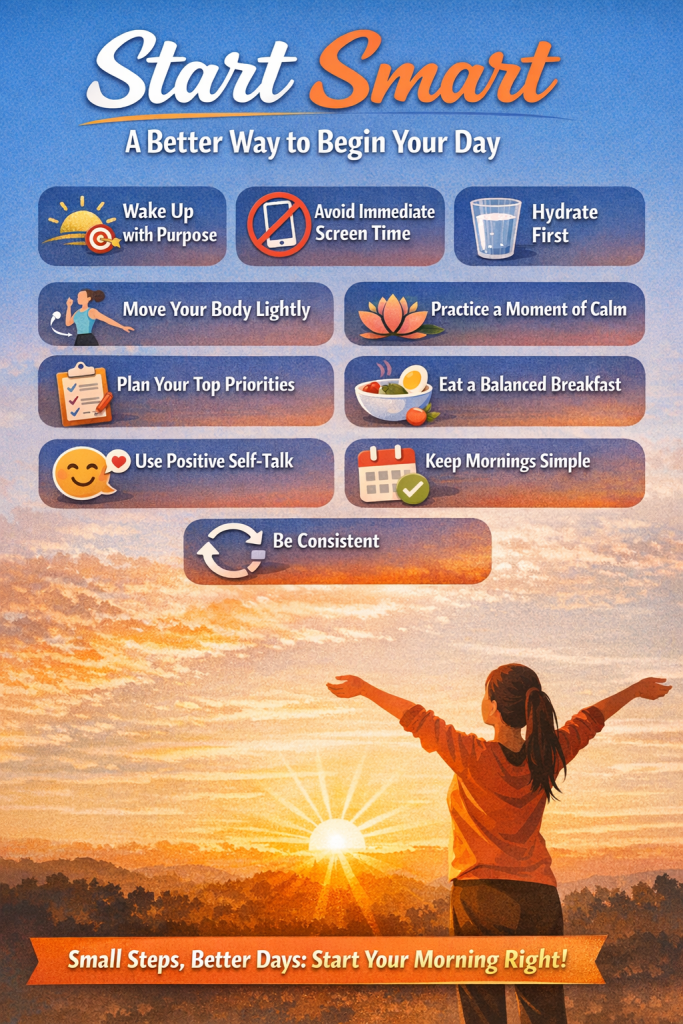
Start Smart: A Better Way to Begin Your Day

How you begin your morning often determines how effective, calm, and focused the rest of your day will be. A smart start does not require drastic changes. Small, intentional actions can create clarity, energy, and direction. Below are simple, practical points to help you start your day better.


1. Wake Up with Purpose

Avoid rushing out of bed. Take a moment to remind yourself of one important task or goal for the day. This creates direction and reduces mental clutter.


2. Avoid Immediate Screen Time

Checking your phone immediately can increase stress and distraction. Give your mind at least 15–20 minutes before engaging with messages or social media.


3. Hydrate First

Drinking water soon after waking up helps activate your body, improves concentration, and supports overall health.


4. Move Your Body Lightly

Simple stretching, a short walk, or light exercise boosts blood circulation and helps you feel more alert and positive.


5. Practice a Moment of Calm

Spend a few minutes in silence, deep breathing, or prayer/meditation. This improves emotional balance and mental clarity.


6. Plan Your Top Priorities

List two or three important tasks for the day. Clear priorities reduce overwhelm and improve productivity.


7. Eat a Balanced Breakfast

A healthy breakfast supports energy levels and concentration. Avoid skipping meals or relying only on caffeine.


8. Use Positive Self-Talk

Begin your day with encouraging thoughts. Confidence in the morning strengthens resilience throughout the day.


9. Keep Mornings Simple

Avoid overloading your schedule early in the day. A calm morning sets the tone for better decision-making.


10. Be Consistent

A smart start works best when practiced daily. Consistency turns good habits into lasting routines.


Conclusion

Starting smart is about being intentional, not perfect. A few mindful steps each morning can lead to improved focus, reduced stress, and better outcomes—both personally and professionally. When you begin your day with clarity, the rest of the day follows naturally.

Change Is Never Easy But Always Possible

  1. What is Change?
    • Change involves doing things differently or trying new approaches. Whether it’s adjusting your lifestyle or switching careers, change helps you grow.
    • Example: Many people transitioned to working from home during the COVID-19 pandemic. While it was difficult initially, many found it beneficial, with more time spent with family and less time spent commuting.
  2. Challenges of Change
    • Change can be difficult because it forces us out of our comfort zone. We might feel anxious, overwhelmed, or unsure at first.
    • Example: When schools switched to online learning, teachers had to learn new technology quickly. It was stressful at first, but over time, teachers became more comfortable and effective in their new roles.
  3. Fear of the Unknown
    • The fear of failure or the unknown is a natural response to change. This fear often stops people from embracing new opportunities.
    • Example: A person considering a career change may fear they won’t succeed in a new field. However, once they take the leap, they often find that their skills are transferable and that the change leads to greater job satisfaction.
  4. Resisting Change
    • Many people resist change because they prefer the status quo. However, resisting change can prevent growth and opportunities.
    • Example: When a company decides to switch from a paper-based system to digital tools, employees may initially resist. However, once they realize that the new system saves time and reduces errors, they embrace the change.
  5. Mindset Matters
    • A positive mindset helps us cope with change. Instead of viewing change as a threat, see it as a chance to improve and evolve.
    • Example: An employee who faces a layoff might initially be upset. But with the right mindset, they can view it as an opportunity to explore a new career path that better aligns with their interests and goals.
  6. Small Steps Lead to Big Change
    • Change doesn’t have to happen overnight. Small, gradual changes can lead to big transformations.
    • Example: If someone wants to get healthier but feels overwhelmed by the idea of intense workouts, they can start with 10-minute walks or swapping junk food for healthier snacks. Over time, these small changes can lead to significant health improvements.

In conclusion, while change can be difficult, it is always possible with the right mindset, small steps, and patience. Change, though challenging, often leads to personal growth and new opportunities that wouldn’t have been possible otherwise.