This blog is a handy guide that helps you streamline your daily tasks, save and grow your money, and get better at handling your feelings. It’s filled with easy-to-follow advice that makes a big difference in how you work, spend, and feel. Dive into our Pioneeredge.io site for practical tips and tricks that make life smoother and more fulfilling.
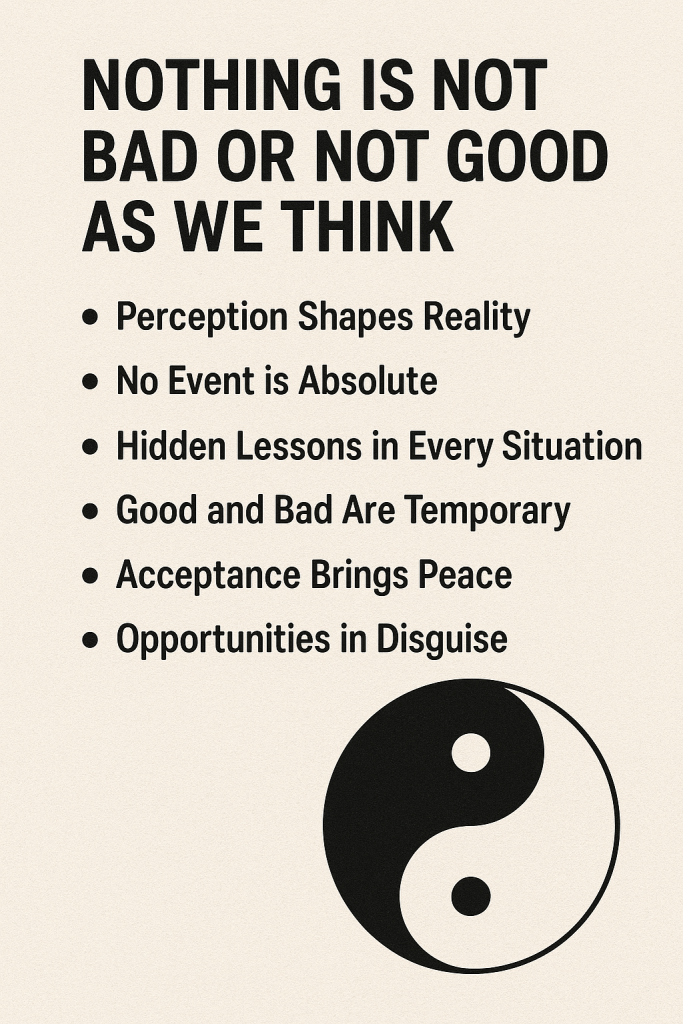
Life often surprises us with situations that we quickly label as good or bad. But in reality, many things are neither completely good nor completely bad—it is our perception that shapes how we feel about them.
Key Points
Perception Shapes Reality
What feels like a setback today may turn into a blessing tomorrow.
Example: Losing a job can seem bad, but it may lead to better opportunities.
No Event is Absolute
Life events are neutral; it is we who add the meaning.
Something that feels painful to one person might feel like growth to another.
Hidden Lessons in Every Situation
Even challenges carry lessons, strength, and wisdom.
What seems “bad” can make us stronger and more resilient.
Good and Bad Are Temporary
Joy and sorrow are like waves—they come and go.
Nothing remains permanent; every phase changes with time.
Acceptance Brings Peace
Instead of labeling things as good or bad, accepting them as experiences brings calmness.
This mindset helps us handle stress with balance.
Opportunities in Disguise
Difficulties often open doors we would never notice otherwise.
The key is to stay open-minded and patient.
Conclusion
Nothing in life is completely good or bad—it is our thoughts and judgments that create those labels. When we look at situations with an open and neutral mind, we find peace, growth, and unexpected opportunities. Life is a teacher, and every moment—whether pleasant or painful—has a purpose.
Change is one of the hardest things in life—but it’s also one of the most important. Growth never comes without discomfort. Let’s explore why change hurts, and why it’s still absolutely worth it.
🔹 1. Pain Comes from Leaving the Comfort Zone
We are naturally wired to prefer comfort and routine.
Change feels like a threat to that security.
But comfort doesn’t lead to growth—only stagnation.
Quote: “Life begins at the end of your comfort zone.” — Neale Donald Walsch
🔹 2. Change Forces Growth
Pain from change is often the birth pain of a stronger version of you.
Whether it’s switching careers, ending toxic habits, or healing emotionally—it pushes you to evolve.
Quote: “Growth is painful. Change is painful. But nothing is as painful as staying stuck somewhere you don’t belong.” — Mandy Hale
🔹 3. Temporary Pain, Long-term Gain
Yes, change hurts initially—but the rewards are lasting.
You become more confident, independent, and emotionally mature.
Quote: “Don’t fear failure. Fear being in the exact same place next year as you are today.”
🔹 4. Change Breaks Illusions
Often, change removes people or situations that weren’t right for us.
Pain reveals truth. Truth leads to freedom.
Quote: “Sometimes painful things can teach us lessons that we didn’t think we needed to know.”
🔹 5. Without Change, There’s No Future
Sticking to old habits and avoiding risks limits possibilities.
Every successful person has had to go through some kind of painful transformation.
Quote: “The secret of change is to focus all of your energy not on fighting the old, but on building the new.” — Socrates
🔹 6. Change Builds Resilience
Every time you go through change and survive it, you become more resilient.
You start to trust yourself even in uncertainty.
Quote: “The measure of intelligence is the ability to change.” — Albert Einstein
🌟 Final Thought:
Change might hurt. But staying the same when you’re meant to grow—hurts even more in the long run. Embrace the discomfort. Walk through the storm. Because on the other side of change is the life you truly want.
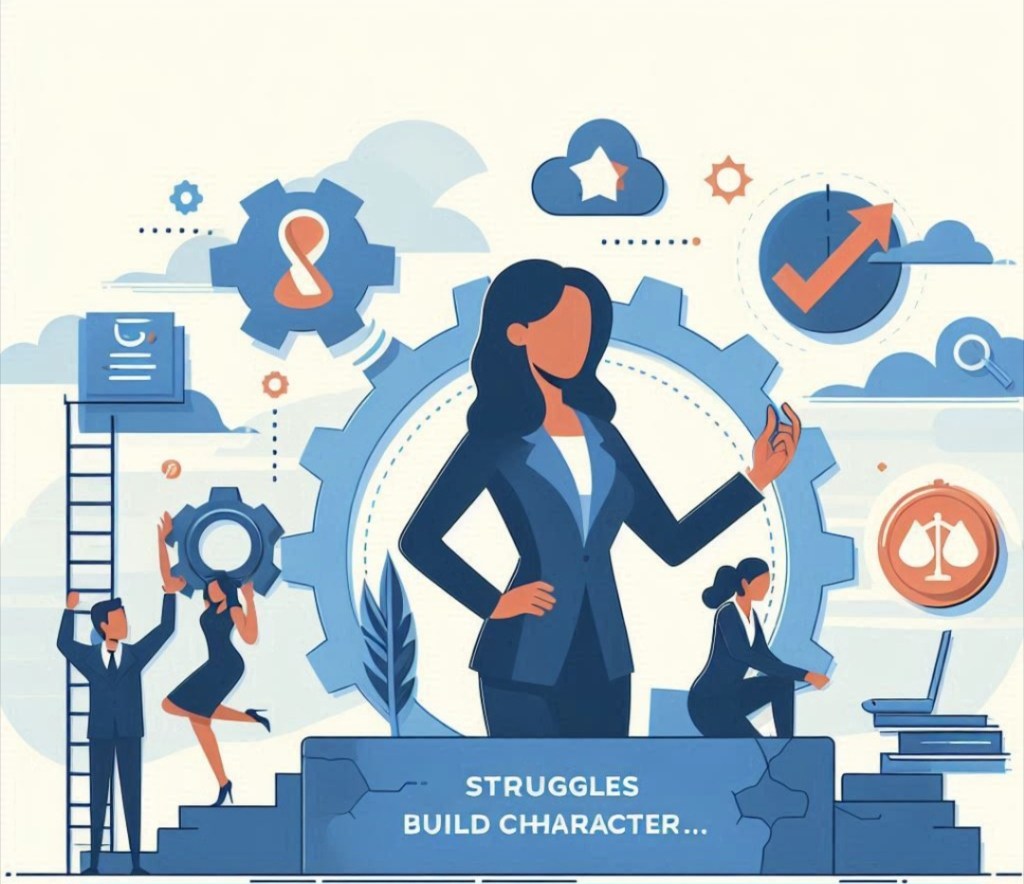
Introduction: Life is full of ups and downs, and we all experience struggles at some point. Whether it’s personal, professional, or emotional, these challenges can be difficult to face. However, struggles play a crucial role in shaping who we are and building our character. While we may want to avoid them, it is often through overcoming challenges that we grow stronger, wiser, and more resilient.
1. Strengthens Resilience:
Struggles teach us to bounce back from failures and setbacks. The more we face challenges, the stronger our ability to keep going despite difficulties.
Example: Every time we get through a tough situation, we become more confident in our ability to handle future challenges.
2. Develops Patience:
Struggle often requires time to overcome. During this process, we learn to be patient and trust that things will improve with effort and persistence.
Example: Working through a difficult project or overcoming a personal setback teaches us the value of waiting for positive outcomes.
3. Enhances Problem-Solving Skills:
Facing struggles forces us to think creatively and find solutions. It sharpens our ability to look at problems from different perspectives and come up with effective strategies.
Example: When you face obstacles, you learn to brainstorm alternatives and think outside the box to solve problems.
4. Builds Confidence:
Overcoming challenges boosts self-esteem. Each struggle we conquer reminds us of our capabilities and strengthens our belief in ourselves.
Example: Achieving a goal after hard work or getting through a difficult time makes us more confident in handling future challenges.
5. Encourages Self-Reflection:
Struggles often lead to personal growth by making us reflect on our strengths and weaknesses. Through self-reflection, we gain better self-awareness and understanding.
Example: After facing a tough time, we often take a step back and think about what we’ve learned about ourselves.
6. Cultivates Empathy and Compassion:
Going through struggles helps us understand the challenges others may face. This makes us more empathetic and compassionate towards others who are going through hard times.
Example: People who have faced financial struggles or health issues are often more understanding and supportive of others in similar situations.
7. Strengthens Mental Toughness:
Struggles build mental toughness, teaching us to stay calm under pressure and keep our emotions in check when things get difficult.
Example: Athletes, soldiers, and entrepreneurs all develop mental toughness by pushing through their struggles and staying focused on their goals.
8. Fuels Personal Growth:
Every challenge we face is an opportunity to grow. Struggles push us to step out of our comfort zones, learn new things, and develop as individuals.
Example: A difficult job, a failed relationship, or any setback can make us more mature and capable.
9. Teaches Gratitude:
Struggles help us appreciate the good things in life. Once we’ve been through tough times, we tend to be more grateful for the positive moments and the progress we’ve made.
Example: After overcoming illness or financial hardship, we appreciate our health and stability even more.
10. Builds Perseverance:
Struggles teach us not to give up. The more we persevere through difficulties, the more we learn to keep going, even when success seems far away.
Example: Inventors, scientists, and successful entrepreneurs often face repeated failures before they succeed, but their perseverance keeps them moving forward.
Conclusion:
Struggles are a necessary part of life, shaping who we are and helping us grow. Instead of fearing challenges, we should embrace them as opportunities to build character, strength, and resilience. Through struggle, we discover our true potential.
No matter how much we plan, life is full of surprises. Things rarely go exactly as we expect. Learning to expect the unexpected helps us navigate life with more ease and flexibility.
Why You Should Expect the Unexpected
Life’s uncertainties can catch us off guard, but being mentally prepared for surprises reduces stress. When we anticipate that things might not go as planned, we are better equipped to deal with setbacks.
Adopting a Flexible Mindset
Being adaptable allows us to handle change with grace. Flexibility means being open to shifting plans and not getting stuck when things don’t go as expected.
Facing the Fear of Uncertainty
Uncertainty can be scary, but it’s part of life. Instead of fearing the unknown, embracing it helps build resilience. Letting go of the need for total control allows us to live with less anxiety.
How to Cope with the Unexpected
Stay calm: Take a deep breath and assess the situation.
Stay focused: Focus on the aspects you can control.
Find solutions: Look for ways to solve the problem rather than stressing about it.
Positivity in Unexpected Situations
Not all surprises are bad. Even in difficult situations, maintaining a positive mindset helps us see opportunities and lessons in what’s happening.
Building Resilience Through Experience
The more we face the unexpected, the stronger we become. Resilience is developed by overcoming challenges, making us more prepared for future surprises.
Learning from Unforeseen Events
Unexpected situations often provide valuable lessons. Each surprise teaches us something new, helping us grow and become more adaptable in the future.
Letting Go of Control
Trying to control everything can be exhausting. When we accept that life is unpredictable, we can let go of the need for complete control and live more peacefully.
Conclusion: Embrace Life’s Surprises
Life is full of twists and turns. By expecting the unexpected, we become more adaptable, resilient, and open to life’s opportunities. Embrace surprises—they are part of the journey!



 Pioneer Edge