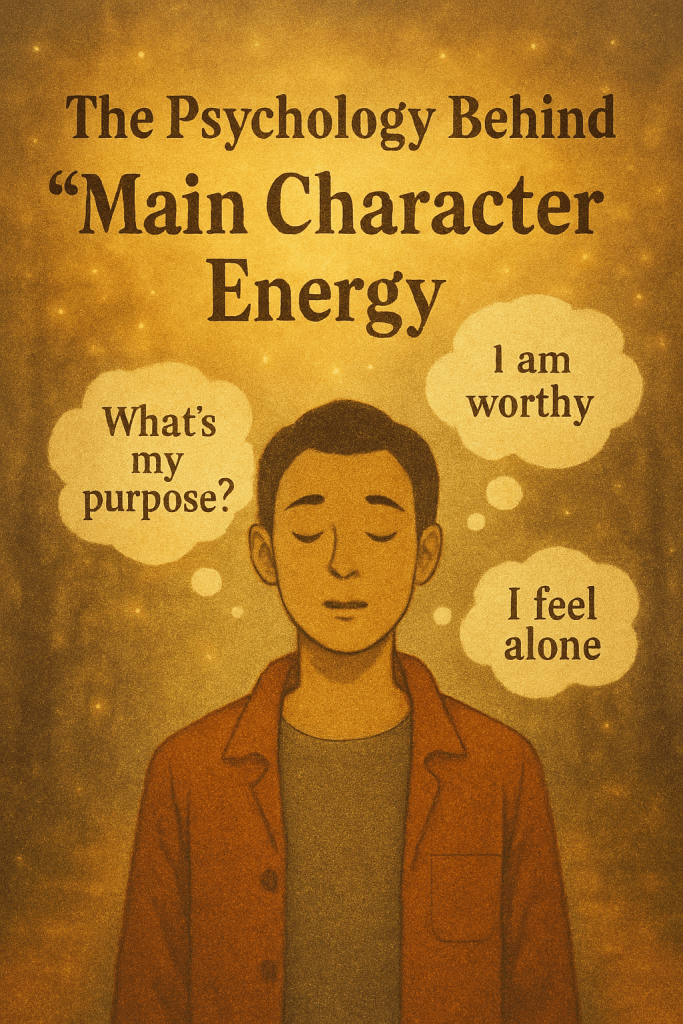
The Psychology Behind “Main Character Energy”

In recent years, you might have heard phrases like “I’m in my main character era” or “Live like the main character.” But what does it really mean? And why is it trending?

Let’s break it down simply.


🌟 What Is “Main Character Energy”?

Main Character Energy (MCE) is a mindset where a person sees themselves as the lead in their own life story. It’s about confidence, self-awareness, and making choices that align with your values, not just blending into the background.

“You are the author of your own story. Don’t hand the pen to someone else.”


🧠 Why It Feels So Good (Psychological Reasons)

  1. Boosts Self-Esteem
    • When you feel like the ‘main character,’ you value yourself more.
    • Example: Dressing up just for a walk because it makes you feel good.
  2. Encourages Mindfulness
    • You become more aware of your surroundings and actions.
    • Example: Drinking coffee slowly while enjoying the moment, like you’re in a movie scene.
  3. Helps Create a Strong Identity
    • You start asking: What kind of person do I want to be?
    • This leads to intentional decisions, not just going with the crowd.
  4. Inspires Personal Growth
    • Main characters overcome challenges.
    • Example: You treat a bad day not as the end—but as the middle of your character arc.
    “You either walk inside your story and own it, or you stand outside and hustle for your worthiness.” — Brené Brown

🎬 Main Character Energy vs. Narcissism

It’s important to note that MCE is not about being self-obsessed or thinking others are less important.
It’s about:

✅ Confidence — not arrogance
✅ Self-love — not selfishness
✅ Growth — not perfection

“You can be the main character of your life without needing to be the center of everyone else’s.”

✨ Practical Ways to Step into Your Main Character Energy

  1. Create Your “Main Character” Morning Routine
    • Start your day with intention. Stretch, journal, listen to music that motivates you.
    • Example: Brew your coffee slowly, stand by the window, and soak in the moment — like the intro scene of a movie.
  2. Dress for the Mood You Want to Create
    • Wear outfits that make you feel confident, even if you’re not going anywhere fancy.
    • Example: Wear that bold shirt or lipstick just because it feels you.
  3. Narrate Your Day (Internally or Out Loud!)
    • Turn simple moments into powerful scenes.
    • Example: Walking to the bus stop? Imagine you’re the hero heading to an important mission.
  4. Celebrate Small Wins Like Big Victories
    • Whether it’s finishing a to-do list or making it through a hard day, clap for yourself.
    • Example: Treat yourself to a solo coffee date after a productive week.
  5. Set a Soundtrack for Your Life
    • Make playlists that match your vibe — “Confidence Mode,” “Healing Era,” or “Rising Strong.”
    • Music/podcast makes every moment feel cinematic and empowering.
  6. Say Yes to Solo Moments
    • Take yourself out for a nature walk, or bookstore visit. You don’t need company to enjoy your life.
    • Example: A quiet Sunday spent journaling and reflecting can feel like a self-love scene.

📖 Final Thought

You don’t need to wait for someone to give you permission. You are already the main character.
Every small act of self-care, courage, and intention writes a better version of your life story.

“The moment you start acting like life is a movie, everything changes. The mood, the energy, the plot—it’s all in your hands.”


The Psychology of Habit Formation: Creating Lasting Change

Introduction

  • Habits influence our everyday actions and overall life outcomes.
  • Understanding habit formation can help you create positive, lasting changes.
  • By applying specific strategies, you can build habits that stick.

1. What Are Habits?

  • Habits are automatic behaviors ingrained through repetition.
  • Examples include checking social media as soon as you wake up or drinking coffee every morning.
  • These behaviors become second nature over time.

2. The Habit Loop

  • Cue: The trigger that initiates the habit.
    • Example: Hearing your morning alarm (cue) prompts you to get out of bed and make coffee (routine).
  • Routine: The behavior you perform in response to the cue.
    • Example: After hearing the alarm, you automatically go to the kitchen to brew coffee.
  • Reward: The positive feeling or outcome you get from the routine.
    • Example: The enjoyment and energy boost from drinking coffee reinforces the habit.

3. Start Small

  • Begin with small, easy-to-achieve actions.
  • Example: If you want to start meditating, begin with just 2 minutes a day instead of trying to meditate for 20 minutes.
  • Small steps are less overwhelming and build confidence as you progress.

4. Be Consistent

  • Repetition is crucial to solidifying a habit.
  • Example: If you want to develop a habit of writing daily, start by writing for just 10 minutes every day.
  • Consistent practice over time makes the habit automatic, regardless of initial motivation levels.

5. Reward Yourself

  • Use positive reinforcement to make the habit enjoyable.
  • Example: After completing a workout, reward yourself with a relaxing shower or a healthy smoothie.
  • Small rewards can keep you motivated and make the habit more sustainable.

6. Know Your Triggers

  • Identify and understand what triggers your habits.
  • Example: If watching TV in the evening leads you to snack mindlessly, recognize the trigger and replace it with a healthier habit, like drinking herbal tea.
  • Being aware of triggers allows you to modify or avoid them, leading to better habits.

7. Push Through the Plateau

  • Be prepared for periods where progress seems to stall.
  • Example: You might initially lose weight quickly with a new exercise routine, but then hit a plateau. Stay committed, as consistency will eventually yield results.
  • Recognizing that plateaus are normal helps you stay motivated through the tough times.

8. Make It Easy

  • Simplify the habit to increase your chances of success.
  • Example: If you want to read more, keep a book on your nightstand so it’s the last thing you see before bed, making it easy to pick up and read.
  • Reducing barriers to action makes it easier to maintain the habit over time.

9. Get Support

  • Leverage social support and accountability to stay on track.
  • Example: Join a book club if you want to read more. Discussing books with others will keep you motivated to continue reading.
  • Support from others makes it easier to stick with your habits and provides encouragement during challenges.

10. Think About Your Identity
– Align your habits with the person you want to become. – Example: Instead of saying, “I want to exercise more,” think, “I am a person who values fitness and health.” – When your habits reflect your identity, they become more natural and sustainable over time.

Conclusion

  • Understanding the psychology behind habit formation is key to creating lasting change.
  • Start with small, consistent steps and use rewards to reinforce your progress.
  • Be mindful of triggers, simplify your habits, and seek support from others.
  • Focus on aligning your habits with your desired identity to make them long-lasting and impactful.