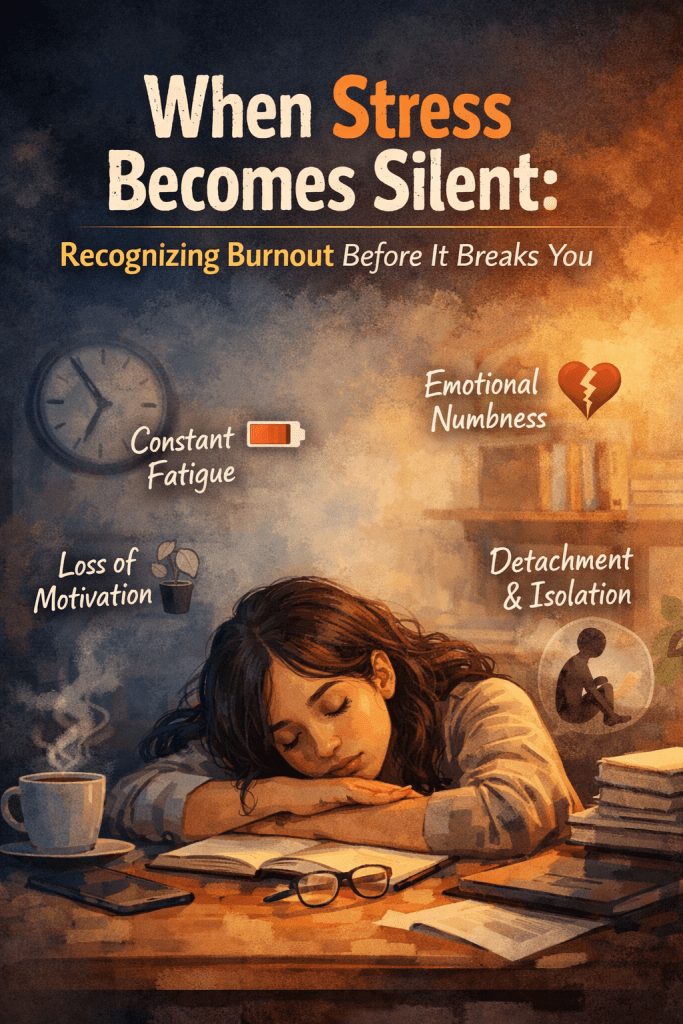
When Stress Becomes Silent: Recognizing Burnout Before It Breaks You

Introduction

Stress is often visible. We feel tired, worried, or overwhelmed and we talk about it.
Burnout, however, is different. It grows quietly. Many people do not realize they are burned out until their health, motivation, or relationships begin to suffer. Understanding early signs of burnout can help us take action before it becomes serious.


What Is Silent Burnout?

Silent burnout happens when prolonged stress is ignored or normalized. A person may continue working, meeting responsibilities, and appearing “fine” while internally feeling drained and disconnected.

It is not sudden. It develops slowly due to continuous pressure without enough rest, emotional support, or recovery.


Early Signs You Should Not Ignore

  • Constant tiredness even after rest
  • Loss of interest in work or daily activities
  • Feeling emotionally numb or detached
  • Irritability over small issues
  • Difficulty concentrating or making decisions
  • Frequent headaches, body pain, or sleep problems
  • Feeling unappreciated or hopeless

These signs are often dismissed as “just stress,” but they may indicate burnout.


Why Burnout Goes Unnoticed

  • We get used to being busy all the time
  • We believe taking rest is a weakness
  • We prioritize work over health
  • We feel guilty for slowing down
  • Others praise us for “handling everything”

Over time, this mindset makes burnout invisible.


Difference Between Stress and Burnout

  • Stress: Too many demands, but you still care
  • Burnout: Emotional exhaustion, loss of motivation, and feeling empty

Stress makes you feel overloaded. Burnout makes you feel drained and disconnected.


How to Prevent Burnout Early

  • Take regular breaks without guilt
  • Set realistic limits on work and responsibilities
  • Learn to say no when needed
  • Talk openly about how you feel
  • Prioritize sleep, nutrition, and physical activity
  • Do at least one activity daily that brings calm or joy

Small changes practiced consistently make a big difference.


When to Seek Support

If exhaustion, sadness, or detachment lasts for weeks, professional help is important. Speaking to a counselor, mentor, or healthcare professional is a sign of strength, not weakness.


Final Thoughts

Burnout does not announce itself loudly. It whispers through fatigue, silence, and loss of joy. Listening early can protect your mental and physical well-being.

Taking care of yourself is not optional. It is essential for long-term success and a healthy life.

Not Everybody Will Love You: Embracing Self-Acceptance

In a world driven by social connections and approval, it’s easy to fall into the trap of seeking validation from others. However, the reality is that not everyone will love you, and that’s perfectly okay.

1. Understanding Human Diversity

  • Different Preferences: People have varied tastes, beliefs, and values. It’s natural for some to resonate with you while others don’t.
  • Personal Experiences: Everyone’s life experiences shape their perspectives. What appeals to one person might not appeal to another due to their unique backgrounds.

2. The Pitfalls of Seeking Universal Approval

  • Loss of Authenticity: Trying to please everyone often leads to compromising your true self, which can cause internal conflict and unhappiness.
  • Emotional Exhaustion: Constantly seeking approval is mentally and emotionally draining, leaving little energy for self-care and personal growth.

3. Embracing Your True Self

  • Self-Acceptance: Embrace your strengths and flaws. Recognize that your worth isn’t determined by others’ opinions but by your own self-respect and confidence.
  • Personal Growth: Focus on your own development and happiness rather than external validation. This leads to more meaningful and fulfilling life experiences.

4. Healthy Relationships

  • Quality Over Quantity: It’s better to have a few genuine connections than many superficial ones. Surround yourself with people who appreciate you for who you are.
  • Mutual Respect: Relationships built on mutual respect and understanding are more fulfilling and supportive, contributing positively to your well-being.

5. Building Resilience

  • Rejection as Growth: Understand that rejection is a part of life and can be a valuable learning experience. It helps build resilience and strength.
  • Self-Reliance: Develop a strong sense of self-reliance and inner confidence. Trust your judgment and decisions without being overly influenced by others’ opinions.

6. Setting Boundaries

  • Protecting Your Space: Setting boundaries is essential for maintaining your mental and emotional health. It ensures that you’re not overextending yourself to please others.
  • Respecting Differences: Accept that it’s okay to disagree with others. Respecting differences allows for healthier interactions and reduces unnecessary stress.

7. Focusing on Positive Influences

  • Supportive Circles: Invest time and energy in relationships that uplift and encourage you. Positive influences help you thrive and maintain a healthy outlook on life.
  • Personal Joy: Engage in activities and hobbies that bring you joy and fulfillment, independent of others’ approval or opinions.

Conclusion

Not everyone will love you, and that’s a natural part of life. By embracing self-acceptance, focusing on personal growth, and fostering healthy relationships, you can lead a more authentic and fulfilling life. Remember, your worth isn’t defined by others’ opinions but by your own self-respect and confidence.