
Have you ever noticed that you repeat the same mistakes, overthink small things, or react emotionally even when you want to stay calm?
You decide to stop worrying, but the same thoughts return. You promise to use your phone less, but you keep scrolling.
Why does this happen?
Our brains learn patterns through repeated thoughts, experiences, and habits. Over time, some behaviours become automatic. The good news is that our brains can learn new patterns through practice. This ability is called Neuroplasticity.
Rewiring your brain does not happen overnight. It begins with small changes in everyday life.
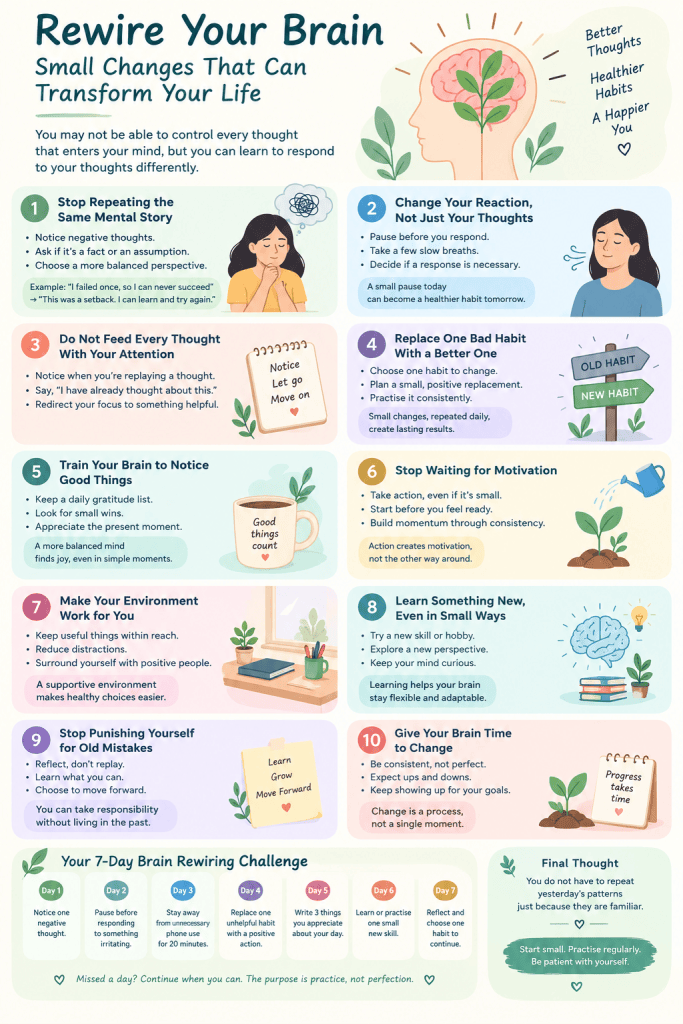
1. Change Your Thinking
Do not believe every negative thought that enters your mind.
- Instead of saying, “I cannot do this,” say, “I can learn.”
- Instead of thinking, “Everything is going wrong,” ask, “What can I improve?”
- Look at situations from different perspectives.
Remember: A thought is not always a fact.
2. Pause Before Reacting
When someone upsets you, do not respond immediately.
- Take a few slow breaths.
- Give yourself time to think.
- Reply calmly when possible.
- Walk away if the situation requires it.
A small pause can prevent unnecessary arguments and regret.
3. Stop Overthinking
Sometimes, we replay the same conversation or problem repeatedly without finding a solution.
When this happens:
- Ask yourself whether the problem needs action.
- Write down your thoughts.
- Focus on something useful.
- Accept that some questions may not have immediate answers.
You do not have to solve the same problem in your mind all day.
4. Replace Bad Habits With Better Ones
Small changes can make a difference.
- Instead of scrolling endlessly, take a short walk.
- Instead of checking your phone repeatedly, keep it away while working.
- Instead of postponing a task, work on it for five minutes.
- Instead of overthinking at bedtime, write down tomorrow’s priorities.
Start with one habit and practise it regularly.
5. Notice the Good Things
Our minds can focus more on mistakes and problems than on positive experiences.
Before sleeping, ask yourself:
- What went well today?
- What made me happy?
- What did I learn?
- What am I grateful for?
Even small moments, such as a peaceful cup of tea or a conversation with a friend, matter.
6. Do Not Wait for Motivation
You may not always feel motivated to begin a task.
Start small:
- Read one page.
- Walk for five minutes.
- Clean one corner of your room.
- Learn one new thing.
Sometimes, action comes before motivation. Small steps can help you build momentum.
7. Change Your Surroundings
Make good habits easier to follow.
- Keep your phone away while working.
- Keep books within reach.
- Organise your workspace.
- Turn off unnecessary notifications.
- Spend time with encouraging people.
Your environment can influence your daily choices.
8. Learn Something New
Give your brain opportunities to learn.
- Try a new recipe.
- Learn a new skill.
- Read about an unfamiliar topic.
- Learn a few words in another language.
- Explore a different way of solving a problem.
Learning and practice help the brain adapt.
9. Stop Punishing Yourself for Past Mistakes
Everyone makes mistakes. Thinking about them repeatedly will not change the past.
Instead, ask yourself:
- What happened?
- What can I learn?
- Can I correct anything?
- What can I do differently next time?
Learn the lesson and move forward.
You can learn from your past without living in it.
10. Be Patient With Yourself
You may follow a good habit today and return to an old habit tomorrow. That does not mean you have failed.
Change takes practice.
Do not expect yourself to become a completely different person overnight. Focus on making small improvements regularly.
A Simple 7-Day Brain Rewiring Challenge
- Day 1: Notice one negative thought.
- Day 2: Pause before reacting in anger.
- Day 3: Spend 20 minutes away from your phone.
- Day 4: Replace one unhelpful habit with a better one.
- Day 5: Write down three good things about your day.
- Day 6: Learn or practise something new.
- Day 7: Reflect on what worked and choose one habit to continue.
Missed a day? Simply begin again. The goal is practice, not perfection.
Final Thought
You do not have to change your entire life in one day.
Change one thought. Improve one habit. Choose one calmer response.
With time and regular practice, healthier ways of thinking and behaving can become more familiar.
“You do not have to repeat yesterday’s patterns just because they are familiar.”
Start small. Practise regularly. Be patient with yourself. Let change happen one choice at a time. 🌿

