
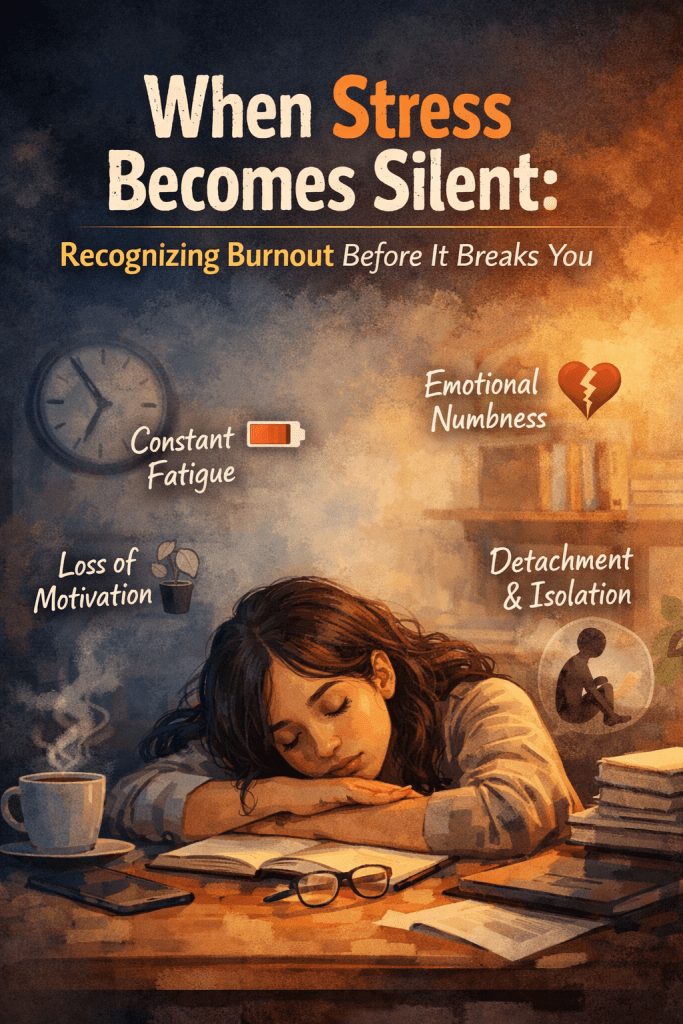
Introduction
Stress is often visible. We feel tired, worried, or overwhelmed and we talk about it.
Burnout, however, is different. It grows quietly. Many people do not realize they are burned out until their health, motivation, or relationships begin to suffer. Understanding early signs of burnout can help us take action before it becomes serious.
What Is Silent Burnout?
Silent burnout happens when prolonged stress is ignored or normalized. A person may continue working, meeting responsibilities, and appearing “fine” while internally feeling drained and disconnected.
It is not sudden. It develops slowly due to continuous pressure without enough rest, emotional support, or recovery.
Early Signs You Should Not Ignore
- Constant tiredness even after rest
- Loss of interest in work or daily activities
- Feeling emotionally numb or detached
- Irritability over small issues
- Difficulty concentrating or making decisions
- Frequent headaches, body pain, or sleep problems
- Feeling unappreciated or hopeless
These signs are often dismissed as “just stress,” but they may indicate burnout.
Why Burnout Goes Unnoticed
- We get used to being busy all the time
- We believe taking rest is a weakness
- We prioritize work over health
- We feel guilty for slowing down
- Others praise us for “handling everything”
Over time, this mindset makes burnout invisible.
Difference Between Stress and Burnout
- Stress: Too many demands, but you still care
- Burnout: Emotional exhaustion, loss of motivation, and feeling empty
Stress makes you feel overloaded. Burnout makes you feel drained and disconnected.
How to Prevent Burnout Early
- Take regular breaks without guilt
- Set realistic limits on work and responsibilities
- Learn to say no when needed
- Talk openly about how you feel
- Prioritize sleep, nutrition, and physical activity
- Do at least one activity daily that brings calm or joy
Small changes practiced consistently make a big difference.
When to Seek Support
If exhaustion, sadness, or detachment lasts for weeks, professional help is important. Speaking to a counselor, mentor, or healthcare professional is a sign of strength, not weakness.
Final Thoughts
Burnout does not announce itself loudly. It whispers through fatigue, silence, and loss of joy. Listening early can protect your mental and physical well-being.
Taking care of yourself is not optional. It is essential for long-term success and a healthy life.


 Pioneer Edge