AI Chatbots: Enhancing Efficiency or Replacing Human Interaction?

AI chatbots have become a common part of our digital world, handling customer service, answering queries, and even providing emotional support. But as they get smarter, people wonder: Are chatbots replacing human interaction?


1. The Growing Role of AI Chatbots

AI chatbots have advanced significantly in recent years, thanks to machine learning and natural language processing (NLP). They are now capable of:
Answering customer queries – Found in websites, apps, and messaging services
Providing instant support – Reducing wait times in banking, healthcare, and e-commerce
Learning from conversations – Adapting to user behavior for better interactions

💡 Example: If you contact an airline, a chatbot quickly provides flight change options before a human agent steps in if needed.


2. Strengths of AI Chatbots

AI chatbots are widely used because they offer several benefits:
✔️ 24/7 Availability – Unlike humans, chatbots don’t need rest and can respond anytime
✔️ Speed and Efficiency – They answer frequently asked questions instantly
✔️ Cost Reduction for Businesses – Companies save money by automating customer support
✔️ Personalized Experience – AI can recommend products based on user preferences

💡 Example: E-commerce platforms use AI chatbots to suggest items based on past purchases.


3. Can AI Chatbots Truly Replace Humans?

Despite their efficiency, chatbots struggle to replace real human interaction. Here’s why:

Lack of Genuine Emotion – AI can recognize feelings but doesn’t experience emotions like a human
Limited Problem-Solving Skills – Complex issues often require human judgment
Trust and Personal Connection – People prefer talking to real humans for important concerns

💡 Example: If a chatbot provides a refund policy but the customer has a unique complaint, a human representative is needed for a fair resolution.


4. AI Chatbots and Humans: A Powerful Combination

Instead of replacing humans, chatbots work best when assisting them. This combination ensures:
✔️ Chatbots handle repetitive tasks – Allowing human agents to focus on critical issues
✔️ Seamless handover to humans – When a chatbot can’t solve a query, it transfers to a real person
✔️ Better customer experience – Faster service while maintaining a human touch

💡 Example: In hospitals, chatbots can schedule appointments, but human doctors provide actual care.


5. The Future of AI Chatbots

🔹 Chatbots will continue to improve with AI advancements like better emotion detection
🔹 They will become more common in education, mental health, and customer service
🔹 However, they will not replace humans – Instead, they will enhance human interactions

Final Thought

AI chatbots are transforming communication, making services faster and more accessible. But at the end of the day, they are tools, not replacements. Human connection, empathy, and deep problem-solving remain irreplaceable.

The Impact of AI on Everyday Life

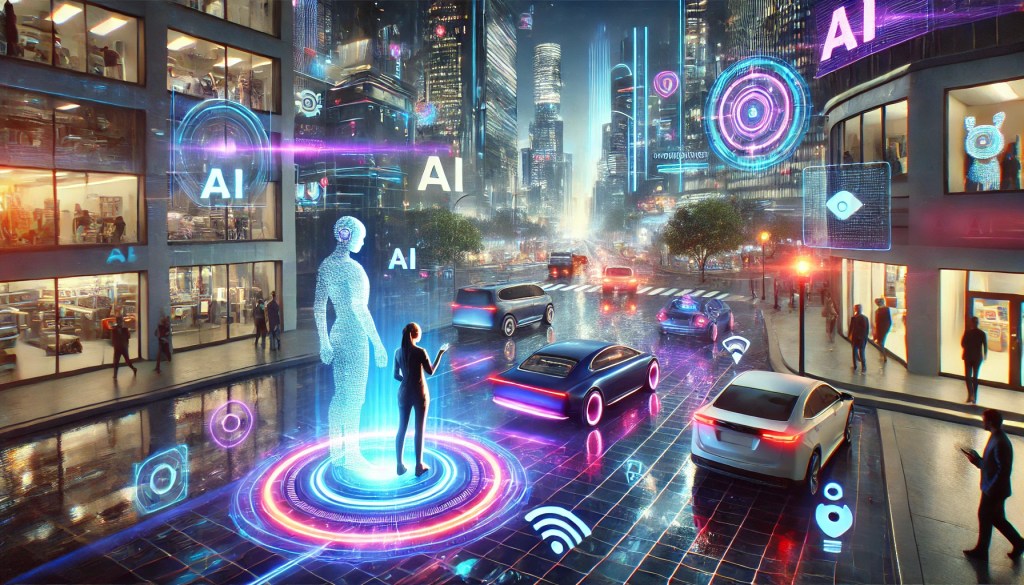
AI is changing the way we live and interact with the world. From simple tasks to complex decisions, its influence is growing. Here’s how AI is making an impact on our everyday lives:

  1. Smart Assistants and Home Automation
    AI-powered devices like Amazon Alexa, Google Assistant, and Apple’s Siri help us manage tasks at home.
    • Example: You can ask Siri to play your favorite song, or Alexa to set reminders, control smart lights, and even order groceries.
  2. Personalized Recommendations
    AI algorithms track your preferences to recommend products, music, movies, and more.
    • Example: Netflix uses AI to suggest shows based on what you’ve watched before, while Spotify curates playlists to match your listening habits.
  3. Healthcare Advancements
    AI is revolutionizing healthcare by diagnosing diseases, managing patient records, and even recommending treatments.
    • Example: AI systems like IBM Watson help doctors identify cancerous cells, speeding up diagnosis and improving accuracy.
  4. Transportation and Navigation
    AI is at the heart of self-driving cars, and even our navigation apps rely on AI for real-time traffic updates.
    • Example: Google Maps uses AI to analyze traffic patterns and suggest the fastest route, while companies like Tesla are working on fully autonomous vehicles.
  5. Customer Support and Chatbots
    Many businesses use AI-powered chatbots to handle customer inquiries and provide 24/7 support.
    • Example: When you visit a website and get an instant response to your query, chances are you’re chatting with an AI bot, like those used by banks or e-commerce sites.
  6. Finance and Banking
    AI is used for fraud detection, loan approvals, and even personalized financial advice.
    • Example: Many banks use AI to detect unusual transactions that may indicate fraud and alert customers right away.
  7. Social Media and Content Creation
    AI influences what content we see on social media, from ads to news feeds.
    • Example: Platforms like Facebook and Instagram use AI to analyze your interactions and suggest posts or ads tailored to your interests.
  8. Voice-to-Text and Translation Tools
    AI makes it easier to communicate across languages and convert speech into text.
    • Example: Google Translate uses AI to instantly translate text and voice from one language to another, helping travelers and businesses communicate globally.
  9. Retail and E-Commerce
    AI helps e-commerce companies optimize inventory, predict demand, and offer personalized shopping experiences.
    • Example: Online stores like Amazon suggest products based on your previous searches, while also using AI to manage stock levels and improve delivery times.
  10. Entertainment and Gaming
    AI is increasingly used to enhance gaming experiences and create more dynamic storylines.
    • Example: In video games, AI can control non-playable characters (NPCs) to create more realistic and challenging environments.

Conclusion:
AI is not just a futuristic concept; it’s already integrated into many aspects of our daily lives. From helping us at home to transforming industries like healthcare and finance, AI continues to make tasks easier and more efficient. The more we embrace its potential, the more AI will continue to shape our world.