
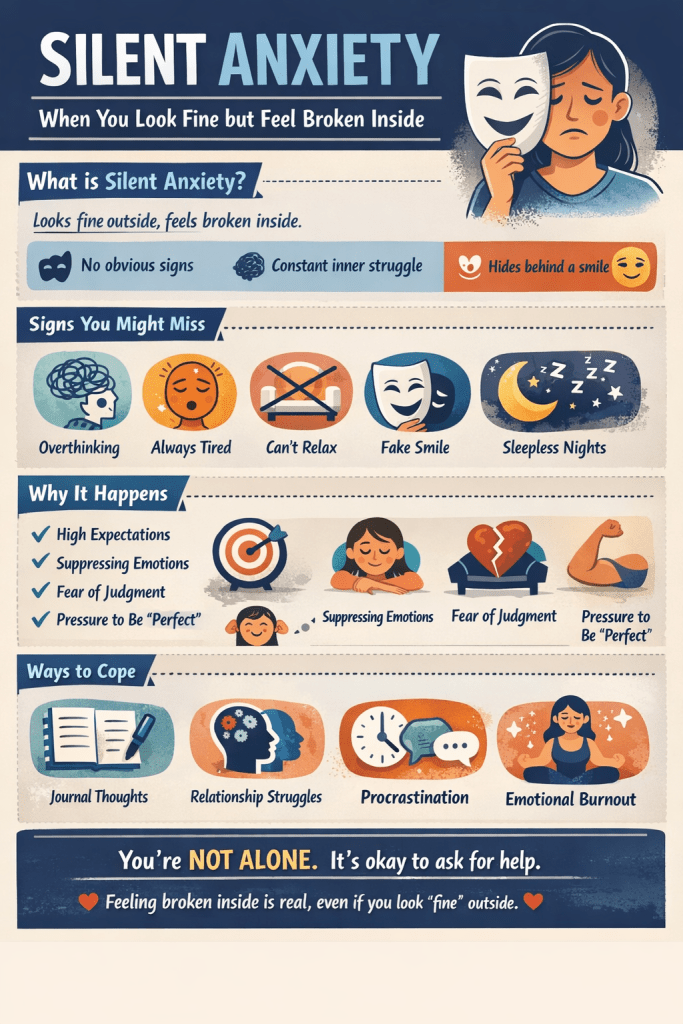
Silent anxiety is one of the most misunderstood psychological experiences today. Unlike visible stress or panic, it operates beneath the surface—making a person appear calm while internally struggling.
🧠 What is Silent Anxiety?
- A form of anxiety that is hidden and internalized
- No obvious symptoms like panic attacks or breakdowns
- People seem “normal” or even successful, but feel overwhelmed inside
- Often ignored because it doesn’t “look serious”
⚠️ Common Signs You Might Miss
- Constant overthinking and replaying conversations
- Feeling tired without physical effort
- Difficulty relaxing even during free time
- Smiling outside but feeling empty or restless inside
- Trouble sleeping due to racing thoughts
- Fear of “something going wrong” without clear reason
🔍 Why Does Silent Anxiety Happen?
- High expectations from self or society
- Habit of suppressing emotions instead of expressing them
- Fear of being judged as “weak”
- Growing up in environments where feelings were ignored
- Pressure to always appear “strong” or “perfect”
💭 What It Feels Like Internally
- A constant mental noise that never fully stops
- Feeling stuck between control and chaos
- Emotional exhaustion without knowing why
- Wanting help, but not knowing how to explain the problem
- Feeling disconnected—even around people
🧩 How It Affects Daily Life
- Reduced focus and productivity
- Struggles in relationships (misunderstandings, withdrawal)
- Increased procrastination
- Loss of interest in things once enjoyed
- Risk of long-term mental burnout
🌱 Simple Ways to Manage Silent Anxiety
- Acknowledge your feelings instead of ignoring them
- Practice journaling to release thoughts
- Set small, realistic goals instead of chasing perfection
- Take short digital breaks to calm the mind
- Talk to someone you trust (friend, mentor, counselor)
- Try basic breathing or mindfulness exercises
❤️ Important Reminder
- Just because it’s invisible doesn’t mean it’s not real
- You don’t have to “prove” your struggle to deserve support
- It’s okay to not feel okay—even if everything looks fine outside
✨ Conclusion
Silent anxiety is a quiet battle many people face daily. Recognizing it is the first step toward healing. When we start being honest with ourselves and allow space for our emotions, we slowly move from just “surviving” to truly living.
 Pioneer Edge