
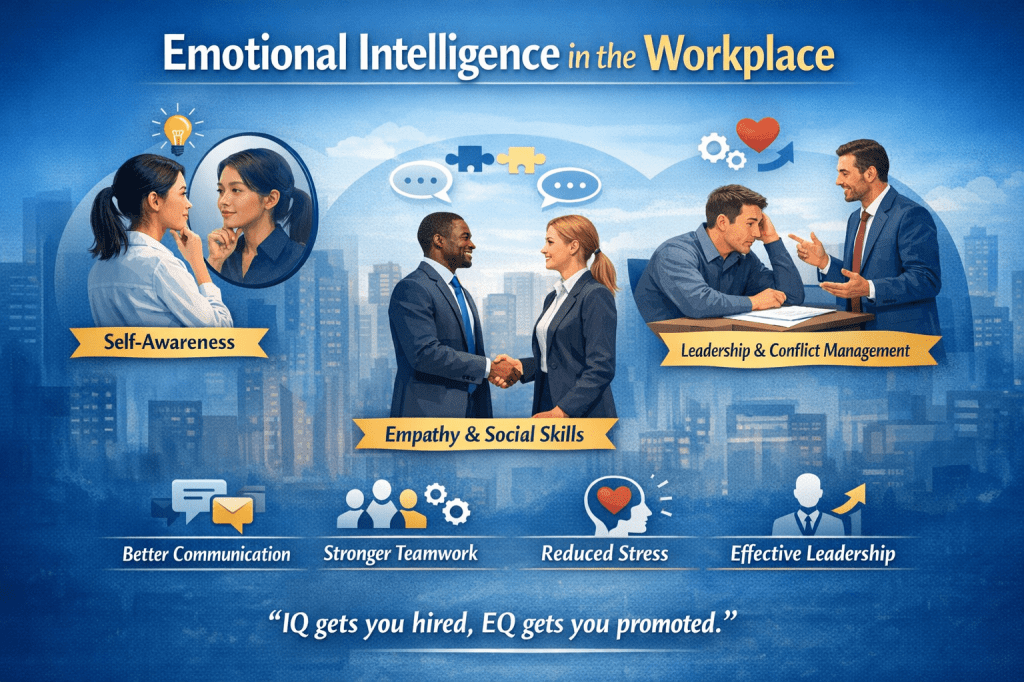
Emotional Intelligence (EI) is the ability to understand, manage, and use emotions effectively — both your own and others’.
In today’s workplace, technical skills alone are not enough. Emotional intelligence determines how well we lead, communicate, and collaborate.
🔹 1. What is Emotional Intelligence?
Emotional Intelligence includes:
- Self-awareness – Understanding your own emotions
- Self-regulation – Controlling impulsive reactions
- Motivation – Staying driven toward goals
- Empathy – Understanding others’ feelings
- Social skills – Building healthy relationships
“IQ may get you hired, but EQ gets you promoted.”
🔹 2. Why Emotional Intelligence Matters at Work
- Improves communication
- Reduces workplace conflicts
- Builds stronger teamwork
- Enhances leadership effectiveness
- Increases job satisfaction
Employees with high EI create a positive and respectful work culture.
“People may forget what you said, but they will never forget how you made them feel.”
🔹 3. Emotional Intelligence in Leadership
A leader with emotional intelligence:
- Listens actively
- Handles criticism calmly
- Encourages team members
- Resolves conflicts fairly
- Inspires trust
Such leaders create psychological safety within teams.
“Leadership is not about control, it is about connection.”
🔹 4. Emotional Intelligence and Teamwork
Teams function better when members:
- Respect different opinions
- Manage disagreements maturely
- Support each other during stress
- Communicate clearly
High EI reduces misunderstandings and strengthens cooperation.
“Strong teams are built on understanding, not just skill.”
🔹 5. How to Improve Emotional Intelligence
- Practice self-reflection daily
- Pause before reacting
- Develop active listening skills
- Seek constructive feedback
- Show empathy in conversations
Small behavioral changes can create a big professional impact.
“Emotional intelligence is not about being emotional; it is about being emotionally smart.”
🔹 Conclusion
In modern workplaces, success depends not only on knowledge but also on emotional maturity. Emotional intelligence builds trust, strengthens relationships, and drives long-term performance.
“Your attitude and emotional control define your professional success more than your technical ability.”
 Pioneer Edge